Showing posts with label text structure. Show all posts

Friday, May 2, 2014

Narrative Informational Writing

In whole group reading, we've been working on narrative informational texts.  This concept was a tad difficult for our students to wrap their brains around.

The text is informational and designed to provide facts to the readers.  However, the text is also written as a story.  These texts aren't literature because the characters and settings are real people.

We used historical passages from the American Revolutionary Era to help students with this concept.  We chose this because students were already familiar with some of the key historical players and we could incorporate social studies content.

When students were reading, they also had to analyze the text to determine the text structure.  They made organizers in their notebook and I used the social studies readers. 


 I split the class into groups and gave them different sections to read.  


After giving them time to struggle with the text, they met with another group to compare answers.  For the most part, both groups came up with the same answers.


They did really well with this concept! 


Friday, April 4, 2014

Informational Texts

With the Common Core State Standards, there is an emphasis on informational text.  For elementary school, the split is 50/50 on informational text and literature.  As students move into middle and high school, the amount of instructional time increases in order to prepare students for the upcoming complex texts.

Reading literature and reading informational texts require different skills from readers.  Reading literature requires students to think about narrative elements, keep track of characters, make predictions, etc.  Informational texts tend to require students to keep track of complex ideas, analyze how events or persons are interrelated and understand how text structures lend themselves to 

In order to support this, we have been reading different articles on Monarch butterflies:


Students have been keeping track of ideas and text structures.  They're working collaboratively to read and analyze the text.


Here they are looking at different text features about Monarch Butterflies.

They did such a great job with this task!  They read a Time for Kids article and two other informational passages on the migration patterns of Monarch Butterflies.  We looked at cause and effect and my students did a great job with explaining how events in a passage go together.  Next week we'll watch a short video clip from Discovery on migration patterns, thus tying in that multimedia element.

I love when they're so excited about what they're learning :)

Tuesday, March 4, 2014

Expository Writing

We started using the expository nonfiction writing unit in Being a Writer, but it simply wasn't meeting our needs.


This week is reading week and we are doing a travel theme.  


Our grade level was assigned Europe, so we are having our students research different European countries.  Instead of writing a paper, they're making travel brochures and loving it!

We reviewed text structures:


Then brainstormed research questions for each:


We went over a very simple organizer for note taking:


For this project, my students are required to use one print and one digital source.  My librarian shared Culture Grams with us.  I taught my students how to access this from our school's library site.  I like that we have access to different data bases and they're kid friendly!
We went over the outline of the brochure:


I modeled a thinking map about Ireland:


From my thinking map, I modeled writing research questions and then determining which text structure I'd use for my written response:


From there, I set up our hallway decoration using the map my awesome neighbor drew:


Norway, by the way, has a very difficult coast line!

We split Europe into four parts and I got Northern Europe.

Tomorrow we're finalizing our brochures and then our hallway display will be up to date!  I love how excited they are to research and learn about different places.

Saturday, February 8, 2014

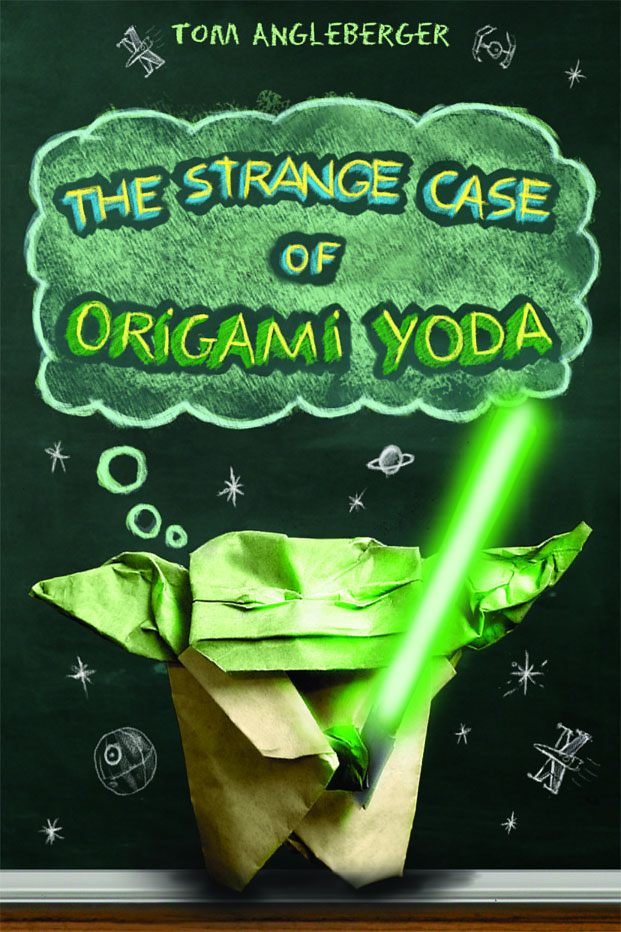
New Product: The Strange Case of Origami Yoda teacher's guide on TpT!

For Battle of the Books, I challenged my students to read at least 3 of the 8 selected books for this year's competition.

It seemed fair that I try to do the same.

I just finished Tom Angleberger's The Strange Case of Origami Yoda and thought it was cute. 


 A tad predictable, but I like how this book is organized with different characters telling different chapters.  It lets students experience how different characters react to different events and challenges their critical thinking.

I created an eighteen page teacher guide, which you can snag here!  I included pre and post reading activities, suggested vocabulary for each chapter, comprehension questions with answers, homework questions and more.  

"Visit my TpT store, you must." -Yoda
(Okay, not really, I was just channeling Dwight!)

Happy reading!

Sunday, January 19, 2014

Seed Folks

We have been using Seed Folks as mentor text during our whole group reading block.

They tried the passage independently and then I modeled metacognition.

Most of them wrote down character traits (which is what we have previously worked on) but didn't write down supporting details for the task (how did the character interact with the garden).

So they tried it again independently, then shared their thoughts with a partner.


There were four different chapters, so I was able to make small groups for them to discuss their character.  They then switched and repeated the process with another character.

We then compared and contrasted how two characters (in the same text) reacted similarly and differently to the same event, in this case, the garden.   They did a pretty good job with it!

We also previewed the book beforehand and talked about how the organization of this text was different than say The Lightning Thief. In Seed Folks, each chapter is written from another character's perspective.  

They did well with this concept of comparing how two characters react different to the same event.  Next up, we are going to be comparing how characters in different texts respond to a similar event.

Happy reading!

Thursday, November 28, 2013

More text structures

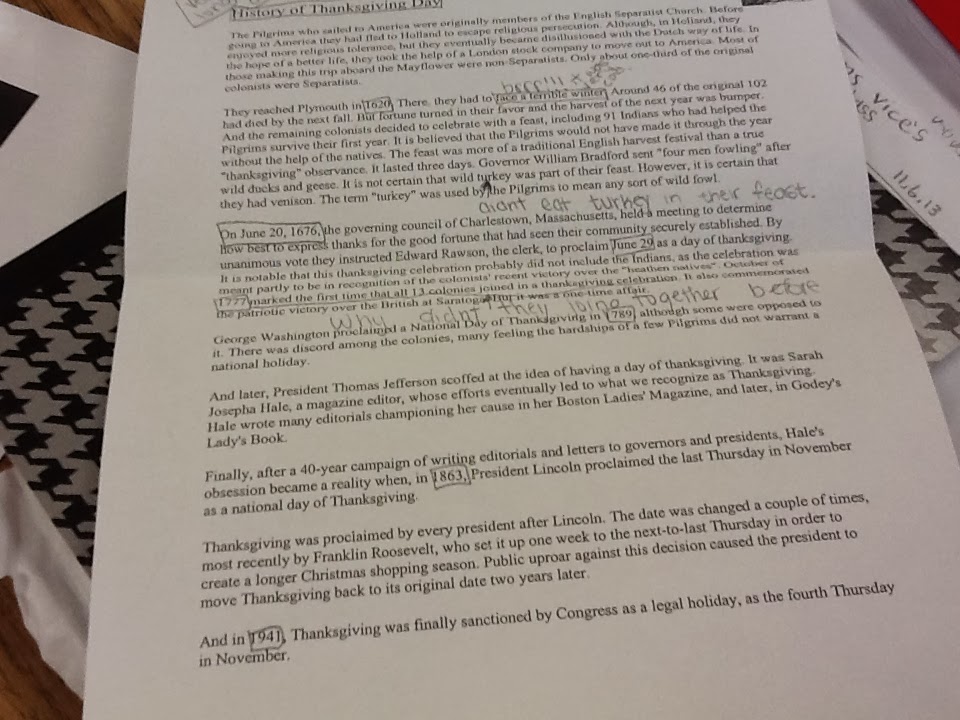
Now that our fifth graders have learned about text structures, we're having them work in table teams to read various articles or old copies of Time for Kids to determine which type is used.

They had a guided organizer in their notebooks that they're adding to as they discover the structure of different articles.


They did a really great job with modeling their thinking and working with their partners.  We read The Scoop on Dino Poop, Jack Roosevelt Robinson and several different articles on the history of Thanksgiving.

We had them compare & contrast the text structures.  Monday we'll write a guided group constructed response about the text structures :)

Sunday, November 24, 2013

Text structures

We spent last week and this upcoming week working on text structures with our students.

We used this great resource from FCRR.org on text structures where students had to sort paragprahs into the categories of informational text.


We also looked at the five types: description, compare & contrast, cause & effect, sequence/chronology, and problem & solution.

Since my students mix up problem & solution with cause & effect, I used a little help from my iPad to clarify the difference: 


I have a clear cause (the angry birds) and then the effect(s) are when the structure falls down and the pigs die because of the birds.


In candy crush, I have a problem and if I'm stumped, the game gives me recommended solutions (game hints).

We're still working on text structure next week with reading different informational articles and analyze them for their purpose and text structure, but they're doing a good job with it :)

Friday, November 1, 2013

Casey at the Bat

This week we read Casey at the Bat and after days of reading and re-reading this poem, we are done!  Here is a snapshot of some of my students' work:


We take our learning very seriously and are getting ready for our academic futures with lots of interaction with our text!  It's not enough to read the poem and answer questions, we dug much, much deeper.  We discussed the text structure of poetry, found examples of figurative language and rhyming patterns.  We looked at how the mood changed over time and how Casey was portrayed (as a hero).  

We summarized the stanzas, looked for themes and backed up our themes with quotes and evidence from the poem.

Then today we watched this school tube clip to analyze how the poem is similar and different from its multimedia counterpart.  

Next week as an extension (and because we need a little more practice with poems), we're doing Casey's Revenge.

Happy reading!

Friday, October 18, 2013

8 weeks down!

8 weeks in and things are finally starting to feel normal :)

My students are loving our read aloud of the Lightning Thief and can't wait to figure out who Percy's dad is.  The ones that have seen the movie or read the novel are doing a great job of keeping quiet to not ruin it for the rest of them :)

We analyzed the development of Percy over the first few chapters of The Lightning Thief:


I modeled the first chapter and students worked in groups of 2 or 3 to re-read, looking for specific details about the main character's thoughts, actions and motivations.

We ran out of room in the classroom and since I didn't want to disrupt the learning of the other classrooms, we went outside to share.

Of course, my principal happened to walk by when she was observing PE and monitoring playground duty.  Luckily the student she asked about our learning was able to fully articulate that we worked in small groups to re-read, looking for evidence and recording our thinking on anchor charts.  Granted, he was off task a few moments later but at least he could focus for that short period of time :)

We are finishing up our first set of novels, so my students have posted their charts of our interesting words on our word wall:


Each time they met with me, they shared the words they found in their reading.  I recorded their answers and changed colors each time so they could easily see which words were new.

They also posted their logs for keeping track of characters:


For the Series of Unfortunate Events, it will be interesting to watch these characters develop over the next twelve books.  AM and PM also compared and contrasted the charts that they made and had some great discussions about the novel.

I also posted their writing ideas chart on our anchor chart about writing genres:


On Fridays, we do our formative assessment on our weekly phonics skill.

My students track their own progress:


We glued trackers inside the front cover of their word study notebooks.  On one side is the skill we're working on and on the other is where they record their score as well as if they're emerging, approaching, meeting or exceeding on that skill.

Happy Friday! 

(Unfortunately, this weekend is devoted to grading and preparing for parent-teacher conferences, so it's a good thing next week is only 2 days with one of those days being a field trip!  We plan well!)

Wednesday, August 21, 2013

Notebooking examples

Today my fabulous grade level and I talked a little bit about notebooks and our expectations for our students.  So I pulled out last year's notebooks to see of the work we did last year and which activities I'd like to do again to challenge students.

Reading

For this one, we were working on text structure and how it impacts a story (RL 5.5)

So I had students glue in 1/2 sized sheets of a reader's theater script (I believe from a scholastic workbook).  We looked at the structural elements and dissected the script.  My students did a really great job at realizing there is more to reader's theater and drama than just simply the dialogue.

Next, here's an example of some of our Greek and Latin word work.

We do a few Greek and Latin roots a week, go over the word's meaning, examples and non examples, then decompose multisyllabic words to determine the word's meaning.

We also look at Common Core Exemplars, as with the poem New Colossus

Here we practiced a close read and were trying to determine meaning.  This poem did pose a bit of a challenge for my students because they were unfamiliar with harbors and the layout of New York City, but they did a good job with scaffolded instruction.  

I like to type up the poems for them and have them glue/tape the pages in their notebook.  While this uses more paper, it allows me to spend more time facilitating discussions and they don't have to mindlessly copy the whole poem.  Instead, they can talk about the poem instead of just writing it.

Here we are just starting a unit with a K/W/L chart.
(K: what I think I know about the topic, W: what I want to learn and L: what I learned (for after the unit) )

We also do a LOT of circle maps in fifth grade to help us organize our thinking.

Lastly for reading,

We do a lot of highlighting and recording our thinking both on the passage and in thinking maps below.  I stress metacognition and that good readers are thinking critically while reading.

Math

In math, we glue in our thinking sheets...a lot.

I also provide them with guided notes:

It helps keep everything organized and requires them to show their thinking multiple ways or with different strategies.  This helps them work on their number sense and aligns with the 8 math practices.

Science

For science, much of our material is provided with FOSS kits.  However, I like to go beyond the provided information and do an extension unit on land forms such as volcanoes.

We watch video clips from Discovery Education and do a lot of exploring.  I also provide copies of notes for students, but they must fill in the missing information.

This really helps with my ELL students and students with IEPs.  They can focus on the content and key words without getting lost with copying all the information.  Plus, it leaves more time for discussions and they're still held accountable for paying attention.

Happy notebooking!
Ms. Vice


Wednesday, July 10, 2013

Mentor Text Ideas

I love using picture books in my classroom. Yes, I know my fifth graders might seem a little old for picture books, but I only pick books with an academic purpose.  Sometimes the purpose is to introduce a concept, other times it is for a mini-lesson.

Here are some of my favorites :)

(Historical Texts)


This is great for discussing historical myths and the American Revolution.  The book talks about John Adams, Paul Revere, George Washington, Benjamin Franklin and Thomas Jefferson.  My students really like the story line and the book provides lots of factual information.  This book is highly recommended :)

This is out of date, but still good to review some of the older presidents:

Just make sure you mention President Barack Obama as well!

This is another great book by one of my favorite authors.


This book addresses the issue of slavery.

(Science Texts)


This is great to review the concepts of force and motion.  I had students follow along with toy cars at their table teams and discuss what would happen next.  We reviewed friction, inertia and Newton's Laws of motions.  Not bad for a picture book!
Bonus: here is the story on you tube :)

This goes great for environments and food chains.

The book lends itself well to discussions and the creation of food webs.


(Writing Texts)


Students not only loved the plot of this story,  but that they could interact with the text by editing for punctuation. After reading this, I displayed the image under the ELMO and my students worked in table teams to return the missing punctuation to the story to add meaning.  They got super excited about editing, which is always a  plus!

This one is great for persuasive writing and students can really relate to the premise!

This cute picture book is great for homophones!

This book looks at the importance of word choice which helps all writers improve!  

This can also work for vocabulary and shades of meaning, both of which are concepts that many students struggle with in the upper grades.

Reading Texts


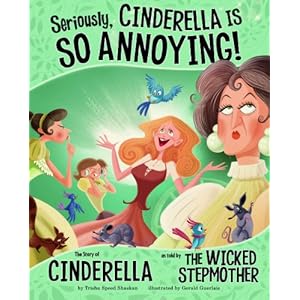
I used these books to discuss alternative points of view and how the narrator's perspective shifts the story (aligning with RL5.6).  These books were highly amusing and prompted my students to want to re-write their own versions of their small group novels.  For example, one group rewrote part of Harry Potter from Draco Malfoy's perspective.  I also loved that there were four different books providing a different mentor text for almost the entire week.  Repeated exposure really helps solidify the concepts!


For helping students make inferences, I'd recommend this book:


Students have some great discussions on this book :)  Bonus, you can review the seasons!

This book serves two purposes, which is great because time is always limited.


You can use this picture book to review text structure as well as punctuation.  I love when reading and writing align!

The next books are great for vocabulary acquisition, which is part of the Common Core State Standards:


The importance of vocabulary in a fun way :)


This book is sure to inspire your class (or school) to have their own vocabulary parade!  For more information, visit the author's website here.

To review the importance of using reference materials, I'd recommend:


Just make sure your students know not to eat books :)

This gem is self explanatory

but still works as a great review for genres.

Math

Place Value:


This book nicely combines science visuals of the universe and math concepts of place value.  I use this at the beginning of the year to build background knowledge and as a formative assessment to see students' understanding of number sense.

Beginning of the Year Classics

Ms. Nelson is always a classic!

I read this book in the first few days of school (while wearing a black dress of course!) and discuss classroom rules.  It's a great introduction to classroom norms and community building.

I love this author and this book does a great job of addressing different student learning styles.

We discuss that learning is a journey and some students just need more time than others.

To help students deal with their emotions appropriately, I always read

during the first week of school.  Students then brainstorm ways that they can deal with their own terrible, horrible, no good, very bad days.  I took the concept of an Alexander day one step further by making Australian flags.  If students are having one of those days, they simply place a flag on their desk to indicate to others that they are feeling sensitive.  My students really responded well to the idea and didn't abuse the flags.  Here is another example of a teacher using the flag concept:


We also read

and discuss the importance of individuality.  Plus it's a great way to apologize to students for accidentally mispronouncing their names!

Another great read for social responsibility and classroom rules is:

I'd highly recommend this book because it forces students to look at their own behavior and accept responsibility...a social skill that often needs fostering :)

This is slightly juvenile, but does a great job at stressing the difference between tattling and informing.

We all want safe classrooms, but students also need to learn to solve some of their own problems.

I love this book not only to briefly review land forms, but also to reinforce norms for listening and speaking:

Students often have volcano-like mouths but this book helps highlight the importance of taking turns.


What suggestions would you add?
-Ms. Vice