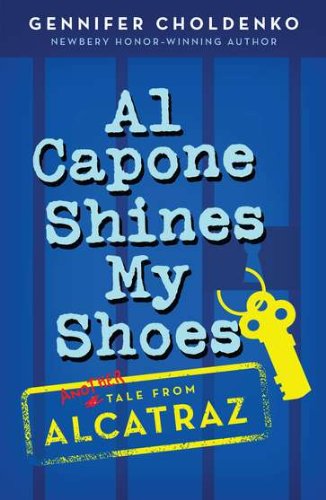
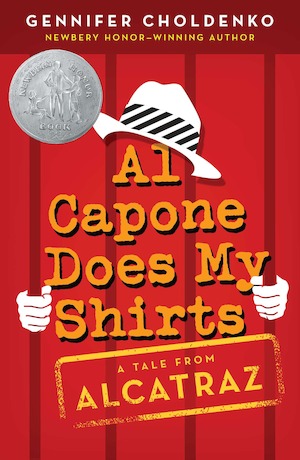
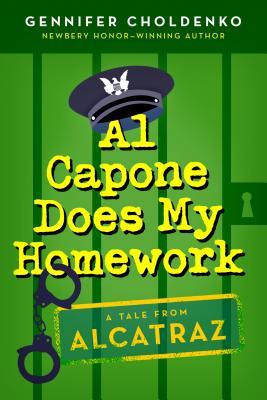
I read this novel with one of my small groups for the first time this year:
As I previously stated, I was really impressed with how well my students handled the complexity of the characters. I really enjoyed the story and I'm glad my students did as well!
They are just finishing the first novel, so I read the second ahead of them so I'd be prepared for our discussions.
My teacher guide is available here on TpT and a bundle guide of both novels will be available soon!
I was pleased with the ending of both books, but then discovered this:
Ah yes, a third book! Time to write a grant proposal :)
Happy reading!
Showing posts with label characters. Show all posts
Sunday, April 20, 2014
Monday, April 14, 2014
Character Analysis Cards
Many of my students struggle with character analysis. They can describe the physical traits of the characters, but often have difficulty providing thoughtful answers. I can usually get surface level descriptions: he's a boy with brown hair who is kind. But for fifth graders, that's not enough.
So to assist them, I made character analysis cards:
I also included synonyms underneath to help my students both understand the character trait and expand their vocabulary. In all, 88 different character traits are included in the bundle pack, available here.
I've used these cards with both whole group read alouds and with my small group novels. They're very user-friendly and encourage students to use more descriptive, age-appropriate vocabulary words.
Before using the cards with any particular novel, I had my students sort the character traits into "good" and "bad". We created an anchor chart from the list, which helps students with their assignments when the cards aren't readily available.
Snag your set today!
So to assist them, I made character analysis cards:
I also included synonyms underneath to help my students both understand the character trait and expand their vocabulary. In all, 88 different character traits are included in the bundle pack, available here.
I've used these cards with both whole group read alouds and with my small group novels. They're very user-friendly and encourage students to use more descriptive, age-appropriate vocabulary words.
Before using the cards with any particular novel, I had my students sort the character traits into "good" and "bad". We created an anchor chart from the list, which helps students with their assignments when the cards aren't readily available.
Snag your set today!
Sunday, March 9, 2014
Analyzing Harry Potter
While it's at a DRA 50, 2 of my groups were struggling with the Harry Potter series. Perhaps it was because of the British slang or the plethora of characters, but only one group is remaining with the series. One group got through book one, another got through the second and my final group is refusing to quit and halfway through book 3.
I know these books can be a challenge because there is so much information in these intricately written novels. There are a lot of characters to keep track of and the characters develop complex relationships with one another.
I'm really pleased with how hard my final group is working at analyzing characters:
I hope they keep it up!
Saturday, February 8, 2014
New Product: The Strange Case of Origami Yoda teacher's guide on TpT!
For Battle of the Books, I challenged my students to read at least 3 of the 8 selected books for this year's competition.
It seemed fair that I try to do the same.
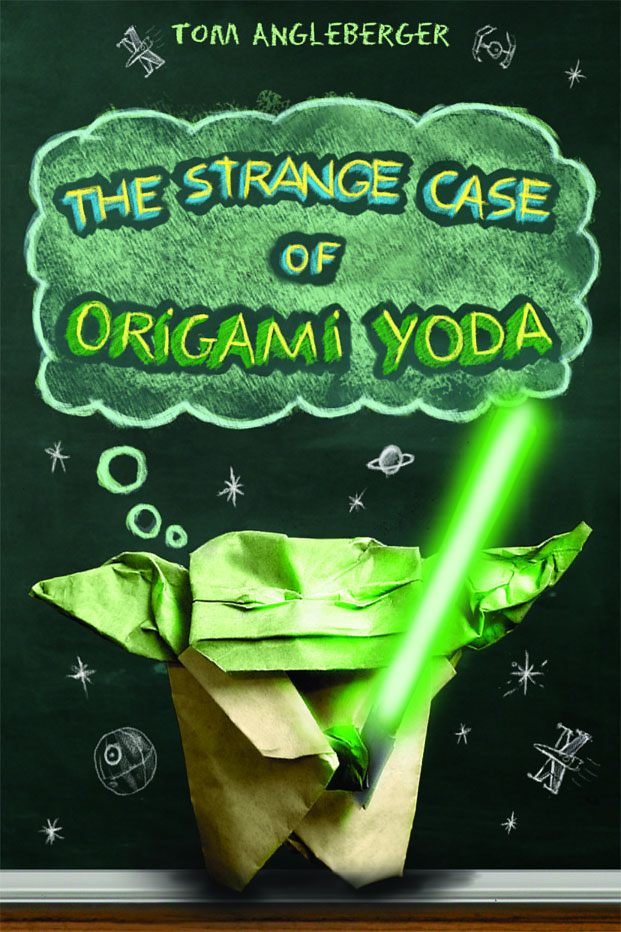
I just finished Tom Angleberger's The Strange Case of Origami Yoda and thought it was cute.
A tad predictable, but I like how this book is organized with different characters telling different chapters. It lets students experience how different characters react to different events and challenges their critical thinking.
I created an eighteen page teacher guide, which you can snag here! I included pre and post reading activities, suggested vocabulary for each chapter, comprehension questions with answers, homework questions and more.
"Visit my TpT store, you must." -Yoda
(Okay, not really, I was just channeling Dwight!)
Happy reading!
It seemed fair that I try to do the same.
I just finished Tom Angleberger's The Strange Case of Origami Yoda and thought it was cute.
A tad predictable, but I like how this book is organized with different characters telling different chapters. It lets students experience how different characters react to different events and challenges their critical thinking.
I created an eighteen page teacher guide, which you can snag here! I included pre and post reading activities, suggested vocabulary for each chapter, comprehension questions with answers, homework questions and more.
"Visit my TpT store, you must." -Yoda
(Okay, not really, I was just channeling Dwight!)
Happy reading!
Character Traits Cards
We've been doing a lot of work with comparing and contrasting in our small groups.
I've been using character trait cards to help my students build their vocabulary. Instead of using "dead words," they are focusing on that juicy vocabulary when describing their characters.
I gave them a pack of trait cards and had them discuss as a group which descriptions would align with the characters in their small group novels. They also had to justify to me why they'd use those specific character traits.
From there, they added the words to their individual character maps:
Then combined their thinking on their group chart:
Due to space, I've been sending them into the hallway to work. I've got the door propped open and I can see them at all times, so that's not a safety concern. That way they can talk in a whisper (or as much of a whisper as excited ten year-olds can manage) and not disrupt those students who are silently reading.
I had another teacher listen in on them while she was observing a classroom and I loved her positive feedback. Not only was my Harry Potter group on task the entire time (which is a feat within itself!) but they were using those descriptive words to compliment one another.
She specifically remembered: " (Student's name), you are just as smart as Hermione!"
So cute.
I'm proud of them for really trying to be kind to one another, even when they don't think any teacher is watching. Well done fifth graders!
I've been using character trait cards to help my students build their vocabulary. Instead of using "dead words," they are focusing on that juicy vocabulary when describing their characters.
I gave them a pack of trait cards and had them discuss as a group which descriptions would align with the characters in their small group novels. They also had to justify to me why they'd use those specific character traits.
From there, they added the words to their individual character maps:
Then combined their thinking on their group chart:
Due to space, I've been sending them into the hallway to work. I've got the door propped open and I can see them at all times, so that's not a safety concern. That way they can talk in a whisper (or as much of a whisper as excited ten year-olds can manage) and not disrupt those students who are silently reading.
(Silently reading and going back to the text for evidence? Score!)
I had another teacher listen in on them while she was observing a classroom and I loved her positive feedback. Not only was my Harry Potter group on task the entire time (which is a feat within itself!) but they were using those descriptive words to compliment one another.
She specifically remembered: " (Student's name), you are just as smart as Hermione!"
So cute.
I'm proud of them for really trying to be kind to one another, even when they don't think any teacher is watching. Well done fifth graders!
Sunday, January 26, 2014
Character Analysis
In whole group reading, we've been working on comparing and contrasting characters. In fifth grade, the expectation is to go much deeper then "one is a boy and one is a girl" responses.
We've looked at how characters in the same text respond similarly and differently to the same event using Seed Folks as mentor text.
We've looked at how characters from different novels respond similarly and differently to a similar event using Tiger Rising, Because of Winn Dixie and Sarah, Plain and Tall as mentor texts with Rob, Opal and Anne.
We've moved on to looking at Matt and Attean in Sign of the Beaver and how they interact differently with the environment.
As you can see, I broke the reading into three sections. I modeled the first day, reading the passage aloud and sharing my thinking (metacognition).
They worked with a partner or in a small group of three on part two and on Monday, they'll do part three independently. They read the passage, take notes since they're "reading with a pencil" and then discuss their ideas.
They're taking notes in the graphic organizer we made in our whole group notebooks:
While they work, not only are they building their stamina (since testing is a few months away) but I get to see how well they're doing with annotating (stop and jot) as well as analyzing the text.
It's a great way to do a quick informal assessment, I just walk around and make notes on a post-it. I can also do a quick intervention if needed.
Some of them will struggle with this independent task and as I've said before, this productive struggle is perfectly okay.
I'm impressed with how well they're doing!
New Bulletin Board
It was that time again. The bulletin board change time.
Normally, I don't mind. However, bulletin board changes coincided with DRA testing and progress reports, so it was a tad stressful trying to get everything accomplished.
Since we've been doing a lot of comparing and contrasting with mentor text like Seed Folks, Tiger Rising, Sarah, Plain and Tall as well as Sign of the Beaver, I decided to carry on the trend.
I had my small groups pick one event from their small group novels and write about how two different characters reacted to this event, drawing on evidence from the passage.
We have to post an introduction to our bulletin boards (or as they're called in our performance zone, "Academic Wall Displays"). The introduction should include the task, the learning targets and what standards students are working on.
Naturally a final draft is WAY more exciting if it's on colorful paper!
I had my students brainstorm and write rough drafts in their notebooks, edit with a partner, then write their final drafts. Space on the back was provided as well.
(Following example not pictured)
One student wrote about an incident with a bear from Brian's Winter. In this passage, Brian Robeson (from Hatchet) befriends a skunk (whom he affectionately names Betty). I was worried I would get a shallow response about how one is a boy and one is an animal. Instead I was pleasantly surprised when she wrote about how both characters are dealing with loneliness, homelessness and find comfort in their routines with each other.
I'm so excited they're "thinking deeply" about what they're reading!
Labels:
Brian's Winter,
bulletin boards,
character development,
characters,
compare,
DRA,
editing,
final draft,
Hatchet,
mentor text,
novels,
partner activity,
Series of Unfortunate Events,
small groups
Saturday, January 25, 2014
The Miserable Mill
I really liked the idea of students being in charge of their own small groups, so I gave them large pieces of butcher paper, set guide lines and let them run with it.
We've worked a lot on keeping track of characters, so that was their first focus:
Since some groups were in the middle of novels, they didn't want to change the way they took notes until their next book switch (makes sense to me!). We've spent a lot of time developing the "left side" of our brains by making lots of charts, changing colors each time and being systematically analytical.
However, just because I'm type A doesn't mean all my students are. So I embraced the creative idea as well and modeled a less structured way of keeping track of the way a character changes over time.
They really liked this strategy so I think I'll keep allowing them the choice of how they want to organize their notes. After all, my ultimate goals are to make them life-long avid readers and empower them to take ownership over their learning. It truly doesn't matter how they take notes and respond to the literature, I just care that they're able to comprehend what they read, discuss the big ideas and be critical thinkers.
Sunday, January 19, 2014
Seed Folks
We have been using Seed Folks as mentor text during our whole group reading block.
They tried the passage independently and then I modeled metacognition.
Most of them wrote down character traits (which is what we have previously worked on) but didn't write down supporting details for the task (how did the character interact with the garden).
So they tried it again independently, then shared their thoughts with a partner.
There were four different chapters, so I was able to make small groups for them to discuss their character. They then switched and repeated the process with another character.
We then compared and contrasted how two characters (in the same text) reacted similarly and differently to the same event, in this case, the garden. They did a pretty good job with it!
We also previewed the book beforehand and talked about how the organization of this text was different than say The Lightning Thief. In Seed Folks, each chapter is written from another character's perspective.
They did well with this concept of comparing how two characters react different to the same event. Next up, we are going to be comparing how characters in different texts respond to a similar event.
Happy reading!
Saturday, January 11, 2014
New Strategy: Mega Chart
My students have done a great job at keeping track of characters for our novels:
So I decided to try a different strategy:
I gave them markers and a large piece of paper to keep track of characters. They were so excited! Their nerdy reaction to their new task warms my heart :)
I can tell who is contributing to the poster because each student is keeping track of one or two characters instead of all of them. They will use a different color each time and I can always tell by their handwriting. They just don't know they're being held accountable for their chart.
Instead of talking with me about how the characters are developing (I know, I already read the books), they'll meet as a group without me to discuss. Since each person is responsible for a smaller portion, they can go more in depth about those characters and how they're changing throughout the novel.
I told all my groups that we're preparing for middle school and that means they get more responsibility. 11/12 groups are really excited for the new challenge! (As for the other...we're working on it. The first task is making sure they do their homework and show up prepared!)
Happy reading!
Important Conversations
I had a very important conversation with one of my small groups this week.
It's one of my higher groups (DRA 60) and they're in the middle of Suzanne Collin's The Hunger Games. They're mature enough for it and they picked it because it sounded interesting.
At our first discussion, they set up their notebooks to keep track of characters, settings, vocabulary words, etc. They were excited.
But slowly over the course of our next few meetings, their enthusiasm for the book changed. They could answer the comprehension questions, analyze characters and were fully participating...but they weren't enjoying it.
So we had the conversation about how we were truly feeling about the book. I gave them each a post-it to respond on and sent them away from one another. I stressed the importance of honestly giving feedback about the book.
When I collected back the post its, three of them didn't want to read it anymore because they simply weren't enjoying it. One still wanted to finish the novel.
So I pulled them back together and we had the important conversation: it's okay not to love every book you read. It's also okay not to finish every book you start.
They looked at me completely bewildered. I went on to explain that sometimes there will be books that you have to read the whole text, even if you don't like it. I went on to explain that our small groups were different. I wanted them to enjoy reading and to interact with literature. I wanted them to fall so in love with these characters that when we were done, they would miss them like old friends. I wanted them to become entranced with the author's word choice, to be so absorbed in their books that they simply don't hear the timer when it goes off and it's time to clean up. I want them to love reading and want to discuss literature.
For that to happen, they have to be making connections with the book they're reading.
As an adult, if I'm not feeling strongly with a book and I'm over half way through, I'll stop because I'm just not that into it. I wanted my students to know that it's okay to do the same.
I told them they gave it an honest effort (13 chapters). I told the one who wanted to finish that he would keep it until he was done and let him know what students would love to discuss the ending with him.
We are meeting again on Monday for our final conversation about the differences in the tributes' attitudes toward the Games and what it means before we switch to our new novel:
As a grade level, we ran out of time with reading The Lightning Thief. So I'm going to start my group toward the end of the novel. That will be a tad strange for me, jumping right into the end of the book but I think they'll be okay.
From there, we'll continue on through the rest of Rick Riordian's mythological series.
I haven't done the Percy Jackson with a small group yet and I'm excited for this new opportunity! I know they loved reading it out loud, so I'm hoping we have the same great conversations in our small groups :)
After our conversation, the look on their faces was priceless: relief. I told them I wish they would have addressed their concerns earlier because I don't want them to struggle to like a book they simply don't. That's not my goal for small groups.
I want them to love reading. I want to mold them into life long readers.
Sunday, January 5, 2014
Tech Tip: Wordle
I blogged about wordle in the beginning of the year because I love using this (free) web 2.0 tool to make our accountable talk posters and norms, like these:
However, I haven't really used it since. So in the interest of trying new strategies with my small groups, we will keep track of characters in our novels this way :)
So, for example, if I was making a wordle about Hermione Granger, I'd start with brainstorming a list of descriptive words, character traits, quotes, etc.
I'd type up a list in word (so it's easy to edit):
Helpful hints:
1) If I'm using a phrase or more than one word, I have to use a ~ between words with NO spaces. The ~ is above your tab key if you're on a PC
2) If you want a word to appear larger, type it more than once (ex: her name)
From there, I'd go to wordle and select create:
Then after selecting create, I copy and paste in my list from word:
Then hit go.
From there, I get my wordle:
Which I can customize with the font, layout & color until I get one I like:
From there, I can print or use another web 2.0 tool like Jing to take a snapshot & save as a png (picture).
I can also go back to my list in word and add more words, then repeat the process!
Enjoy!
However, I haven't really used it since. So in the interest of trying new strategies with my small groups, we will keep track of characters in our novels this way :)
So, for example, if I was making a wordle about Hermione Granger, I'd start with brainstorming a list of descriptive words, character traits, quotes, etc.
I'd type up a list in word (so it's easy to edit):
Helpful hints:
1) If I'm using a phrase or more than one word, I have to use a ~ between words with NO spaces. The ~ is above your tab key if you're on a PC
2) If you want a word to appear larger, type it more than once (ex: her name)
From there, I'd go to wordle and select create:
Then after selecting create, I copy and paste in my list from word:
Then hit go.
From there, I get my wordle:
Which I can customize with the font, layout & color until I get one I like:
From there, I can print or use another web 2.0 tool like Jing to take a snapshot & save as a png (picture).
I can also go back to my list in word and add more words, then repeat the process!
Enjoy!
Labels:
accountable talk,
character development,
characters,
collaboration,
first days,
freebie,
Harry Potter,
interesting words,
jing,
norms,
small groups,
strategies,
tech tip,
technology,
wordle
Friday, January 3, 2014
Chronological Order Sorts all up for the Percy Jackson!
I'm pleased to announce that chronological order sorts are now up for all 5 of the Percy Jackson series on TpT! Answer keys are included and my students love the challenge! I love hearing my students analyze how characters develop over time and how events build upon one another to provide meaning!
I also learned how to add custom categories on my TpT site:
I'm really excited for being able to organize my products to make it easier for customers :)
Happy reading!
Thursday, January 2, 2014
New Strategy
I saw this idea on pinterest and I'm really excited to try it with my small groups!
I'll have them write down their favorite quotes from the novel we are reading and then justify why they chose those quotes :)
I'm also excited to try it for characters. Instead of having students keep track of all the characters in the novel, I'll have them keep track of one or two in depth. When we're done with our book, I'll have them compare and contrast the characters.
This strategy would also work well for settings or interesting words.
I'm excited for them to try this new format in their notebooks!
Labels:
analyzing,
character development,
characters,
compare,
contrast,
interactive notebooks,
interesting words,
novels,
pinterest,
quotes,
quoting accurately,
setting,
small groups,
strategies
Monday, December 30, 2013
Upcycling for social studies
So I'm all for centers that give a fun twist on authentic, meaningful work.
My favorite new idea is taking an old "Guess Who?" game:
And upcycling it for social studies or book characters:
I think it'd be challenging for students but they'd love it! I'd probably laminate the cards for durability but I think the few hours of teacher prep would be worth it.
Let's put the joy back in teaching :)
Subscribe to:
Posts (Atom)