Showing posts with label poetry. Show all posts

Sunday, February 12, 2017

Learning Snapshots

I wish more of my day was spent teaching students, or preparing to teach students, rather than filling out paperwork.

Nevertheless, this  is the career I signed up for.  Here are some snapshots of our learning lately.

Poetry Mini-Unit

We've been working on different types of literature (RL 5.5).  Students are quite familiar with the components of novels, enjoy reader's theater, but tend to avoid poetry like the plague.  I get it. I don't actively seek out poetry to read during my free time either.

We spent a few days on reader's theater in small groups.  I selected a passage about Mount St. Helens to tie in with our volcano unit (more on that later) and took the assignment as a speaking grade.


They also practiced taking portions of their novels and turning it into reader's theater scripts.


In doing so, students had to analyze what parts would be explicitly stated by the characters, what information would be presented in stage directions, and what parts might be eliminated.

But since poetry is a major deficit for many of my students, we decided as a planning team that this needed to be addressed.  With poetry, we'll discuss summarizing, layout (stanzas, lines), figurative language, and poetic elements.  Coincidentally, February is also poetry month, so we look like we're totally on top of things!

We started with a class guided poem on World of a Blossom, which actually sparked a forty minute conversation on symbolism (I budgeted twenty, tops).  They glue the poem into their notebooks, then practice annotating their thinking.  We worked on identifying types of figurative language before talking about what the flowers might represent.

I modified this lesson from Jefferson County's long range ELA plans, available {here}.  I taught their unit with fidelity a few years ago and really enjoyed their pacing.  Want just the poem? It's page 29 in the PDF.


Some of mine are experimenting with color-coding their notes.  As a teacher, I allow them this flexibility because fifth grade is such a crucial time for them to develop study skills that work for them.  I've had this discussion a few times with fellow teachers, but hold true to my belief that their notebooks are for them. As long as they have the basic requirements, they can annotate however they'd like.  We practice multiple strategies in the first half of the year, but the second semester means I let them choose how they take notes.  It helps get them ready for middle school where they'll take ownership of their learning.

From there, we did some partner and table reads.  I found a book in our school library about states and poems.  I selected some from the New England region to tie in with our geography unit.  As a class, we read about light houses.  As a table, they found alliteration in a poem about Gulls and Buoys.  With partners, they read about the Islands off of Boston Harbor (complete with pirates).


Surprisingly, they're really enjoying it! We spent some time earlier in the year reading The Raven, which they liked.  We'll be trying some colonial poems next, reading about Moana Loa, and ending with New Colossus.  (Timely, right?)

Project Based Learning

With our project-based learning, we ended our unit on catapults and moved into colonial America (which ties in with our social studies plans).  I'm so fortunate to get to work with such an awesome GATE specialist who co-plans and ties her standards in with what we're teaching.  

They're doing a five class period mock simulation of Jamestown and the starving time.  Each group has one leader (John Smith) that has to decide how the money is spent and which building tasks they'll complete during each given class period (season).  When the whole group works together on one task, it often leads to a lot of fighting.  It's interesting to watch which groups are able to divide up the work load to accomplish more during each season.

We also made sure to not select GATE students to be the group leaders.


Here a group is working on building their palisade, to protect Jamestown from wild animals and hostile natives.

Landforms

We also finished up a mini-unit on volcano formation.


A fellow teacher and Hawaiian native came in to talk about Hawaiian culture.  One of her friends sent us a box of goodies from the Hawaiian Research labs on active volcanoes.  We spent time exploring topographic maps of Mauna Loa and watched several Discovery Ed video clips.


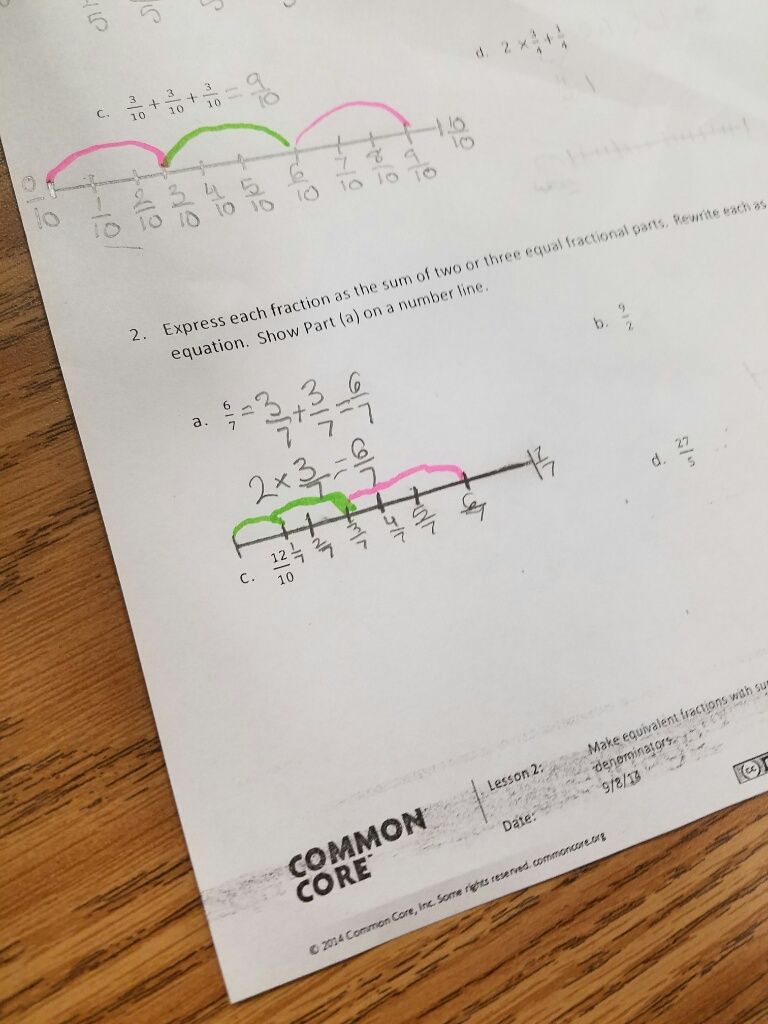
We've explored equivalent fractions, fractions on a number line, adding and subtracting fractions.  Once again, color coding the fractional amounts is a helpful strategy for many students.  We use colored pencils quite often in math these days.


We have reviewed with bingo in small groups:

This game was part of an old {donorschoose} project and is still loved by students years later.  Thank you again to friends, family, and strangers who continue to support my students and their learning.


Up next?

This week brings the 100th day of school, Valentine's day and the class party, and getting ready to go to the neighboring middle school for a tour.

#yeareightisgreat

Wednesday, October 21, 2015

The Crossover

As I've previously shared, I'm doing Battle of the Books again with the fourth and fifth graders!  This time around, not only do I have a better grasp of what I'm doing and how the competition works, but I also have the help of our school's librarian.  Together, Mrs. H and I seem to have this under control.  

We meet after school for an hour on Mondays with the students who are able to stay.  Since many have sports or ride the bus, we can't force all students to stay.  Plus it wouldn't be fun if we were forcing them to be there.  We want students to want to read.  The fourth graders will also check in with Mrs. H on their recess on Monday (because it coincides with her prep).  The fifth graders will also check in with me weekly during independent reading.  Since there are five fifth grade teachers, I'm just giving each teacher a different day.

The kids will come meet with me for a few minutes so we can touch base on their questions, the book, and their progress.  The work is entirely on them, we just want to help keep them accountable by setting small, measurable goals and seeing how they progress with weekly check ins.

I'm going to try to read all eight books this year, but with all my grading, it does seem a tad daunting.

I tacked the first book, The Crossover, over the weekend.


This book is written as a series of connected poems, which was a new format for me.  I was immediately hooked and found myself literally laughing out loud at certain parts.  One particular moment, when the father is explaining to his son that talking to his twin (who has his first girlfriend) is futile at best, is written as:

Trying to talk to your brother right now is like trying to push water uphill with a rake.

Just let that mental image sink in.  

What a gloriously wonderful way to describe the struggle to communicate with someone who is wrapped up in first love infatuation and resistant to any conversation.

The whole novel is filled with lines like that.  Words that seize you and engulf you with passion.  While I'll admit I had to do some googling for some of the basketball references, I was incredibly impressed with the ease at which the story flowed, mixing sports and real life situations.

It's not a surprise this novel won both the Newbery and the Coretta Scott King awards in 2015.

I was not prepared for the plot twist and had a very emotional reaction to this book.  Fortunately, I was alone at home when I finished this up, so I was able to avoid the looks of strangers.

Part of my assignment as an adviser, I had to write fifty questions to use in the competition.  Since I was writing anyway, I took notes throughout the whole book to turn it into a novel guide.

I'm working this for {TpT} and hope to have it available next week.  Stay tuned!


Friday, October 31, 2014

The Raven, round 2

Last year, we did the Raven with students.  The lesson went fairly well, but I made some tweaks for round two.

This year, we did the entire lesson in 1 day instead of 3.  

In my district, Nevada day & Halloween fall on the same day, so the kids didn't have school on the 31st.  We celebrated on the 30th instead.  Those same lucky kids have off next Monday AND Tuesday because teachers have staff development.  I'd love a five day weekend too, but I'll settle for three.

Since the day before Halloween and their epic weekend can be a tad challenging behavior wise (and their costumes don't help!), I wanted a hands-on, engaging task before their costume parade.

I read the first stanza of the Raven after we reviewed elements of poetry.  They then did a close read on the rest of the poem with their neighbors and I think they did a great job!


We then watched two different video clips on Teacher tube.  We compared and contrasted the video clips before talking about the multimedia elements that contributed to the video's meaning.  

They had a great time doing this grade-appropriate Halloween activity!

Thursday, January 16, 2014

Echoing Green

For our intervention block this week, we've been working on reading strategies.  We went over how to record our thinking and that we read poems more than once.  

They did an awesome job finding the shifts in mood in the poem Echoing Green.  Last year our amazing coaches (M & G, love you both!) did a close read lesson with us with this poem.  Based on what they did with us, I had my students color the "happy" words in one color and the "sad" words in another color.  I was really impressed that collaboratively figured out that the poem is happy in the beginning and shifts to sadness toward the end.


I modeled on the smart board.


Their think sheet.


Kagan strategy of "pair up and share" to get them movin' and talking :)


Tomorrow we'll re-read the stanzas and talk about the theme.  Next week they'll create a written response about the poem.

They just get so excited about reading!


Saturday, November 16, 2013

RACE strategy

During our intervention part of the day, I've been working with students on subtracting decimals to the thousandths, figurative language, theme and poetry.

We moved into working with constructed responses and one of my favorite strategies is RACE:


RACE stands for:

Restate the question.  Students use words from the question to formulate their opening or topic sentence.  This helps them to focus their answer.

Answer the question(s) that are asked.  For our district, constructed responses tend to have several parts and it's important for students to answer all portions.

C: Complete sentences.  Students need to remember the rules of grammar, spelling, etc when writing their responses.  We went over that one sentence does not suffice.

E: Evidence your answer, twice.  This helps them with main idea and key supporting details, as well as quoting accurately or inferring details from the passage.

New Colossus

In whole group reading, we are loosely following another school district's long range plans and mentor texts.  They did a good job with spiraling and using authentic literature & informational text for the Common Core State Standards.  

We worked on poetry and many students were struggling with identifying theme, looking for figurative language and summarizing stanzas.

So their must do this week involved the poem New Colossus.  I picked this poem because it is challenging and within the 5-6 band of suggested poetry.  

Each day they read the poem independently with a different purpose.  Thursday they compared notes with a neighbor and Friday we talked about it as a class.  

Here are some snap shots of their note taking:


I think they did a great job.  A few figured out the poem was about the Statue of Liberty, but once I revealed that, there were quite a few "a ha!" moments, or as we call them, brain fireworks. 

I then had them reread the poem, this time looking for clues that the poet used to reveal the subject of the poem.

They had a lot of fun with it, so I think I'll make a poetry station where they glue in poems & practice this strategy.  I'll type up a list of what I expect for each read through and have them switch marker colors each time they read.  By doing one marker color per read/per purpose, it holds them accountable to all the steps without them even realizing it :)

Happy reading!


Friday, November 1, 2013

Casey at the Bat

This week we read Casey at the Bat and after days of reading and re-reading this poem, we are done!  Here is a snapshot of some of my students' work:


We take our learning very seriously and are getting ready for our academic futures with lots of interaction with our text!  It's not enough to read the poem and answer questions, we dug much, much deeper.  We discussed the text structure of poetry, found examples of figurative language and rhyming patterns.  We looked at how the mood changed over time and how Casey was portrayed (as a hero).  

We summarized the stanzas, looked for themes and backed up our themes with quotes and evidence from the poem.

Then today we watched this school tube clip to analyze how the poem is similar and different from its multimedia counterpart.  

Next week as an extension (and because we need a little more practice with poems), we're doing Casey's Revenge.

Happy reading!

Thursday, October 31, 2013

The Raven

We've been working on poetry, so in honor of Halloween, we read Edgar Allen Poe's The Raven.

I read the first stanza to them and they listened for alliteration.

Then, we watched two videos on teacher tube. 

The first was with an actor (Christopher Walkin?) reading aloud the poem with spooky sound effects.  The first video did a great job at establishing an eerie mood, similar to the true intention of Poe.

The second was the animated Simpson's version:


Students took notes on the video:


Then compared and contrasted the multimedia elements in the presentations.

They had a great time with the poems :)


Themes & Poetry

This week we are working on poetry.  Specifically, we're reviewing text structure, figurative language, theme and summarizing a poem.  We're also working collaboratively to summarize the stanzas, identify characters' feelings, locate shifts in mood and practice note taking on the text to become more engaged readers.

We used the poem Casey at the Bat this week and broke it up into a 3 day unit.  The first day was the "I do" where I modeled the skills we're working on, the second day we did as a class and the third day they did part with a partner and the rest for homework.


Then I re-read the entire poem, thus modeling the importance of re-reading for information.  We then referred to our theme chart:

(You can grab it here as part of a TpT bundle!)

We did Casey at the Bat not only because it's a recommended text, but it's also because I'm a Boston Red Sox Fan :)
Today, in honor of Halloween, we are doing the same process with Edgar Allen Poe's The Raven.

I know it will be a little tricky for some students, but it's a fun challenge and it's festive!

In small groups today, we're also trying a new collaborative strategy for writing a constructed response.  Since many of them have finished their first novel, we are going to look for the theme.

I made them a guide for their CRs:


They're going to write independently on a post-it today and tomorrow combine 3 or 4 people's post-its into one group response. I'm excited to give this new strategy a try!

Next, here's a student working on our affix sort, a new process I'm trying this week.

We did Wednesday's activity yesterday of sorting affixes.

You can download your own copy here!


We also have our new centers ready to go!


Thursday, July 11, 2013

New Use for an Old Book

I saw this idea on pinterest this morning and as much as it kills me to write in books, I kind of love it:


Now, to modify it for my classroom, I'd make photocopies of the pages for the students.  It'd be a cool poetry activity after we finish a novel.  Or could be a cool poetry activity after finishing up a science unit :)