eight: grade level teams
In teaching, there is simply never enough time to accomplish everything. This is the sad, unfortunate reality. However, grade level teams can make things better and for them, I am thankful.
This year, my work wife Ms. H and I are planning reading for the grade level. Not everyone uses our plans or copies, but that's okay. Two other teachers plan/copy math while 2 more tackle writing. It's nice to share the work load and bounce ideas off one another.
I'm also thankful that my work wife understands that unfortunately, sometimes this planning needs to happen outside of contract hours. Tomorrow, on the day before Thanksgiving, we have a lunch date at Panera to crank out the next few weeks worth of reading plans.
Beyond having other people to plan with and share the copying fun, it's nice to have a team where we can share ideas and strategies. We are within a few days of each other in terms of plans, so it's nice to be able to give one another a heads up about what math lessons the kids struggle with or share strategies that really seemed to click for students.
As an added bonus, 4 of the 7 third grade teachers are in my pod, which means help is literally right next door. I am thankful for grade level teams.
I wish more of my day was spent teaching students, or preparing to teach students, rather than filling out paperwork.
Nevertheless, this is the career I signed up for. Here are some snapshots of our learning lately.
Poetry Mini-Unit
We've been working on different types of literature (RL 5.5). Students are quite familiar with the components of novels, enjoy reader's theater, but tend to avoid poetry like the plague. I get it. I don't actively seek out poetry to read during my free time either.
We spent a few days on reader's theater in small groups. I selected a passage about Mount St. Helens to tie in with our volcano unit (more on that later) and took the assignment as a speaking grade.
They also practiced taking portions of their novels and turning it into reader's theater scripts.
In doing so, students had to analyze what parts would be explicitly stated by the characters, what information would be presented in stage directions, and what parts might be eliminated.
But since poetry is a major deficit for many of my students, we decided as a planning team that this needed to be addressed. With poetry, we'll discuss summarizing, layout (stanzas, lines), figurative language, and poetic elements. Coincidentally, February is also poetry month, so we look like we're totally on top of things!
We started with a class guided poem on World of a Blossom, which actually sparked a forty minute conversation on symbolism (I budgeted twenty, tops). They glue the poem into their notebooks, then practice annotating their thinking. We worked on identifying types of figurative language before talking about what the flowers might represent.
I modified this lesson from Jefferson County's long range ELA plans, available {here}. I taught their unit with fidelity a few years ago and really enjoyed their pacing. Want just the poem? It's page 29 in the PDF.
Some of mine are experimenting with color-coding their notes. As a teacher, I allow them this flexibility because fifth grade is such a crucial time for them to develop study skills that work for them. I've had this discussion a few times with fellow teachers, but hold true to my belief that their notebooks are for them. As long as they have the basic requirements, they can annotate however they'd like. We practice multiple strategies in the first half of the year, but the second semester means I let them choose how they take notes. It helps get them ready for middle school where they'll take ownership of their learning.
From there, we did some partner and table reads. I found a book in our school library about states and poems. I selected some from the New England region to tie in with our geography unit. As a class, we read about light houses. As a table, they found alliteration in a poem about Gulls and Buoys. With partners, they read about the Islands off of Boston Harbor (complete with pirates).
Surprisingly, they're really enjoying it! We spent some time earlier in the year reading The Raven, which they liked. We'll be trying some colonial poems next, reading about Moana Loa, and ending with New Colossus. (Timely, right?)
Project Based Learning
With our project-based learning, we ended our unit on catapults and moved into colonial America (which ties in with our social studies plans). I'm so fortunate to get to work with such an awesome GATE specialist who co-plans and ties her standards in with what we're teaching.
They're doing a five class period mock simulation of Jamestown and the starving time. Each group has one leader (John Smith) that has to decide how the money is spent and which building tasks they'll complete during each given class period (season). When the whole group works together on one task, it often leads to a lot of fighting. It's interesting to watch which groups are able to divide up the work load to accomplish more during each season.
We also made sure to not select GATE students to be the group leaders.
Here a group is working on building their palisade, to protect Jamestown from wild animals and hostile natives.
Landforms
We also finished up a mini-unit on volcano formation.
A fellow teacher and Hawaiian native came in to talk about Hawaiian culture. One of her friends sent us a box of goodies from the Hawaiian Research labs on active volcanoes. We spent time exploring topographic maps of Mauna Loa and watched several Discovery Ed video clips.
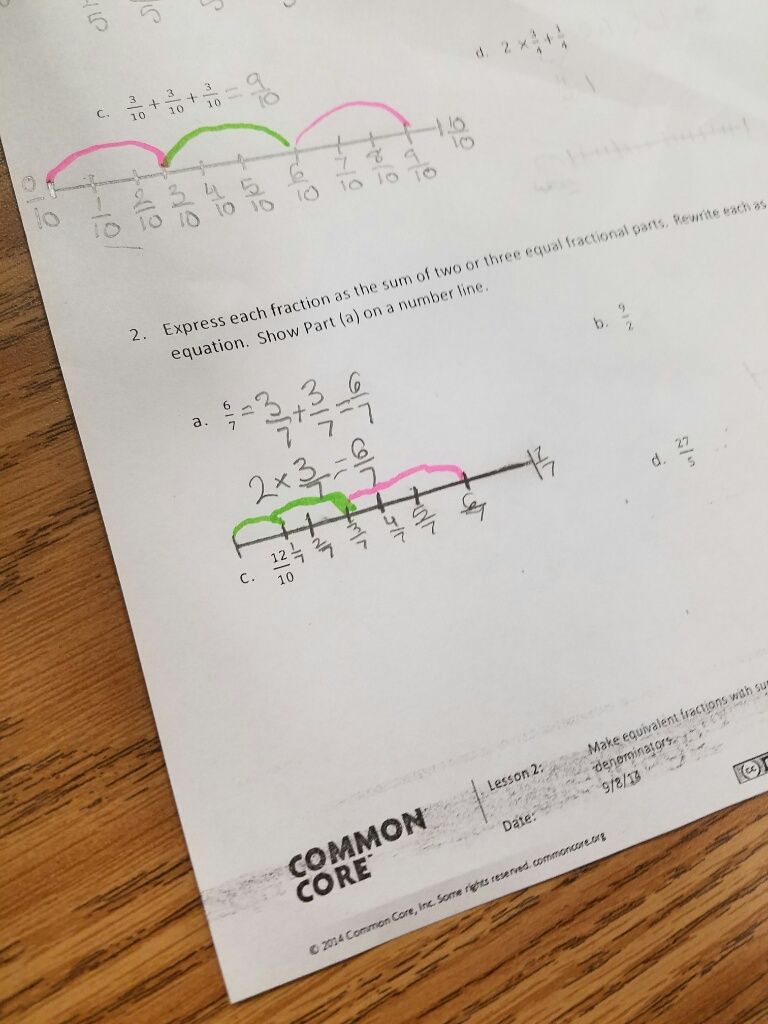
We've explored equivalent fractions, fractions on a number line, adding and subtracting fractions. Once again, color coding the fractional amounts is a helpful strategy for many students. We use colored pencils quite often in math these days.
We have reviewed with bingo in small groups:
This game was part of an old {donorschoose} project and is still loved by students years later. Thank you again to friends, family, and strangers who continue to support my students and their learning.
Up next?
This week brings the 100th day of school, Valentine's day and the class party, and getting ready to go to the neighboring middle school for a tour.
#yeareightisgreat
We recently had a teacher leave our school, which ruffled a few feathers. He hadn't been there for very long and there was some miscommunication, but I did my best to stay out of the drama. It's been a bit of a logistical nightmare trying to find subs to cover a short term vacancy that coincided with the holidays. I did my best with the students that I had and was fortunate enough to meet some awesome new substitutes.
However, upon his departure, the leaving teacher sent me a very thoughtful and kind email. He expressed his appreciation for opening my classroom door, for showing him new strategies, and for letting him learn from my teaching style.
The warm and fuzzy feelings continued when he shared that I would have been that "game changer" teacher for him as a child or his children now because of the passion I bring to the classroom. He commented that it was inspiring to see how truly excited my students were about their learning.
That's why I teach. I'm humbled that someone who was in my classroom co-teaching for such a short amount of time was able to notice the effort I put in and the difference it makes for my students.
Thank you, fellow teacher, for your compliments on my craft. I love what I do. I'm glad it shows, even on the most difficult of days.
With the exception of last year, every one of my years in the classroom has involved co-teaching with the special education teacher(s).
In a nutshell, this means that one or more of my students are in special education and qualify for services. Since we advocate for the least restrictive environment for these students, most spend a majority of the day in the general education classroom with two teachers. I am the general education teacher while another teacher (the special education teacher) comes into my classroom to co-teach with me. This "push-in" model means that all my students benefit from having two teachers.
This means that two teachers can pull intervention groups. This means that one teacher can lead the lesson while the other pulls individuals or groups for remediation or extension (because this is sadly often overlooked). This means that one teacher can deal with behavior issues privately in the hallway while the other continues instruction, so the rest of the class doesn't lose out on instruction time.
There can be challenges in terms of planning and sharing responsibilities, but open communication and a shared sense of ownership (these are our students) goes a long way. One of the biggest challenges can be IEP meetings, which are held yearly to update families on their child's progress at meeting individual education goals. These meetings can be very difficult for parents, especially when they don't realize how much their child is struggling. Tissues are always available and readily used. I've been fortunate enough to have some amazing parents that know their child has educational struggles and are happy to work with the school to provide what's best for the child. I've also been in situations where parents are in denial, blame educators, and threaten to sue me in the middle of meetings...but these parents are few and far between (thank goodness!).
Of all the things that randomly appear in my Facebook news feed, this one really hit home:
I'd love to start every single meeting with parents this way. Yes, every single one. This may be posted outside my door during parent teacher conferences and brought up in future IEP meetings.
This business of educating little ones is hard work, but so rewarding.
For the past few years, I've participated in co-teaching with a fairly high degree of success. Co-teaching is when two teachers (one usually being a special education teacher) are both in the classroom. There are many models of co-teaching, all of which I've used.
1) One teach, one observe
I use this model least frequently. We usually did this to provide lesson feedback for the instructing teacher or to model a lesson for the observing teacher.
2) Station teaching
We used this model for math groups. I would teach the new lesson at the smart board, my co-teacher would be at the kidney table pulling another group to review, work on word problems, etc while the rest of the class was on the computers, doing partner work, or at a math station. Each teacher was doing a separate lesson.
3) Parallel Teaching
We used this for reading and writing. The class was divided in half and all the students were given the same lesson. This style lended itself well to writing because each group would have a different perspective.
4) One teach, one assist
This model was used most frequently. One teacher, usually myself, would be giving the lesson while the other would be walking around clarifying for students or pulling conferences.
5) Team teaching
During this model, both teachers are giving instruction. This worked quite well for think alouds where we would model accountable talk and show what partner discussions should look like.
6) Alternative Teaching
During this model of co-teaching, one teacher would pull aside a small group and deliver remedial or extension activities.
I'm not sure if I will be doing any co-teaching this year, but it definitely has it's strengths and weaknesses. For me, it was difficult to give up control of instruction to another teacher. Trust also comes into play because you have to trust that the other teacher is doing his or her job. Planning can also be a struggle, as can work ethics. I know that as an educator, I tend to overplan which is beneficial but also meant I was doing more than my fair share of the preparation for co-teaching, which wasn't always fair.
Today I had the opportunity to co-teach:
I'm not sure which model the one teach, one naps on the material best aligns with...
On the bright side, tutoring is going well! Look at her go in that notebook.