Showing posts with label American Revolution. Show all posts

Sunday, April 5, 2015

Digging into History

One of my favorite eras in history is the American Revolution...which so nicely ties itself with some of our informational text standards (RI 5.6 and RI 5.8).  These standards examine multiple perspectives, author bias, reasons, and evidence--perfect for looking at this era! 

Over a week and a half, students analyzed many different accounts, including Henry Wadsworth Longfellow's The Midnight Ride of Paul Revere, Paul Revere's account (available here), and multiple accounts of the Boston Massacre.

I gave each table team a different combination of the primary source documents from Colonial Williamsburg (here) to closely read and annotate.  

From there, students did a gallery walk to see how other groups analyzed the documents.


What is great to see is the different ways students dive into the text.  Some make meaning by drawing pictures to narrate what is occurring in the text.  Some highlight reasons and evidence.  My job is to teach them multiple strategies, then let them take ownership over their own learning. 

How do your students dive into history?

Friday, June 20, 2014

What? You've Never Seen This?

Now that it's summer break, I have time to reflect upon yet another year in the classroom.  This year was my most challenging yet and for that, I am grateful. 

I have some definite face-palm moments in my classroom.

Sometimes I forget that things I assume are common knowledge just...aren't.

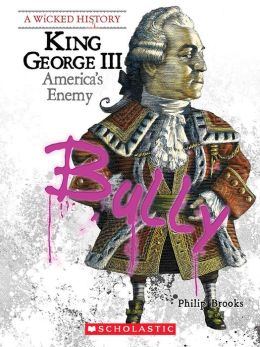
The first of many, many moments was when I had to clarify that kings and queens do actually exist.  We were reading informational text on the American Revolution, which naturally included a discussion on King George III.  This was our mentor text:


They really enjoyed reading and analyzing this passage, although the language and vocabulary did provide some stumbling blocks.  However, through discussion, I realized that many of them were confused.  They knew the passage we were reading was true and based on facts because it's informational text (hallelujah they've got that down), but were "clunking" on the king label.  They didn't realize that kings and queens were real.  So after a quick discussion that included yes, kings are real and no, dragons aren't, they seemed to be more okay with the topic.  

Apparently they then all went out to recess and informed the other fifth graders, thus ending their confusion as well.  Kings did (and do) exist.  Glad that's cleared up.

Second, some didn't realize World War Two actually occurred at all, much less (potentially) within their grandparents' lifetime.  We were reading Number the Stars and I set the necessary historical background.  We looked at some maps (okay Google Earth...it's much more interactive) and took a virtual field trip of Copenhagen.

Then some of my higher students, who have read Number the Stars earlier in the year made the connection that wait, this was based on true events.  Another made the connection to some video game, which sparked a class-wide discussion.  Next time, I think I'll start with the video game reference since that made a lot more sense to many of them.

Live, learn, and teach on!

Friday, May 2, 2014

Narrative Informational Writing

In whole group reading, we've been working on narrative informational texts.  This concept was a tad difficult for our students to wrap their brains around.

The text is informational and designed to provide facts to the readers.  However, the text is also written as a story.  These texts aren't literature because the characters and settings are real people.

We used historical passages from the American Revolutionary Era to help students with this concept.  We chose this because students were already familiar with some of the key historical players and we could incorporate social studies content.

When students were reading, they also had to analyze the text to determine the text structure.  They made organizers in their notebook and I used the social studies readers. 


 I split the class into groups and gave them different sections to read.  


After giving them time to struggle with the text, they met with another group to compare answers.  For the most part, both groups came up with the same answers.


They did really well with this concept! 


Friday, October 11, 2013

Week 7

This week in whole group reading, we were working on main idea, supporting details, alternative perspectives and inferencing.

We used the passage "we were here, too" (grab it for free here) and the kids did a great job.

First, we made a list of people we associate with the American Revolution:


 I was really proud of my students for acknowledging that slaves were important.

They read the passage with their table teams:


They also were working on their metacognition and recording their thoughts and predictions on paper:


They did a really great job with this activity :)

They were also shocked to learn that George Washington had slaves, but we talked about the historical context and how he treated his slaves.  I think I blew their minds with that fact though!

They are also working on fluency passages in small groups as a station/center:

One person watches the timer (the passage is to be read for one minute).
One person reads.
The other listens and provides meaningful feedback in the form of buddy coaching.


They have made some great growth on their words per minute (WPM) for their Aimsweb RCBM probes!

Also in stations, they were working on sorting different scenarios into survival elements:

(The groups that did this are reading Hatchet and Hunger Games, so survival is one of the themes of their novels)


Students then analyzed my sort and added suggestions on how to improve it or add cards to sort.

I like that they help me improve my centers and then have more input, thus more investment :)


(As a side note, you can see one of my polka dot rugs and my polka dot center bucket in these images...I love polka dotted things!)

Sunday, July 7, 2013

American Revolution

If I had to pick a favorite social studies era to teach, it would be the American Revolution :)

Last summer, I had the privilege to represent Nevada at the Mount Vernon Teacher's Institute which was hands-down one of the best professional developments I've ever attended.


We spent a week living at Mount Vernon and learning all about the life of George Washington.  Since I studied political science and political theory, this was a dream come true. I got to be surrounded by so much history and engage in amazing conversations with other like minded history nerds :)

However, reality set in: it's hard to get fifth graders excited about history.  So with a little help from this video, they were hooked.  We did a four week unit on the American Revolution and analyzed primary source documents (the Declaration of Independence & the Constitution) to look at text features and text structures.  We analyzed multiple perspectives with the help of this graphic organizer snagged from pinterest.


We read a plethora of informational, historical nonfiction and picture books, including some of my all-time favorites:


My students picked a side, researched their person, then had a "meet and greet" with other persons in the colonies.  

We then re-enacted battles outside, highlighting the difference in fighting styles.  The redcoats lined up and had to remain linked to their partner as they marched down the field.  The rebels were free to work independently, simulating gorilla warfare. 

We then compared and contrasted the uniforms, weaponry and fighting styles.

Students analyze maps of the colonies and create their own battle plans.  After the war, I had students work in groups to create a new government, linking nicely into the Continental Congress and the founding of our country.

I wish I could teach social studies all day long :)