Showing posts with label Reading A-Z. Show all posts

Saturday, March 1, 2014

That time has come...

For the first six months of the school year, I ran my small groups with ease.

Okay, not ease per say, but with a relatively stress-free mindset compared to the rest of my day. 

 I knew where to go for my weekly fluency passages (reading A-Z), I had a list of must do's to choose from based on what standards we were working on in whole group and what grade level assessment data revealed.  I've changed up our "word work" a few times, but am now using this great resource:


Based on my notes from our daily fluency practice (and my RCBM progress monitoring), I select what focus skill we'll be using for the week.  So far we've done irregular past tense verbs, silent consonants and soft & hard c.  Next week we're looking at stressed and unstressed syllables.

Over the past several years, I've meticulously created teacher guides for my novels.  Through the amazing generosity of supporters on donorschoose, awesome sales on Scholastic, thorough searching at second hand bookstores, Amazon's fast shipping and shamelessly using my teacher discount at both Borders and Barnes and Noble, I have established a decent classroom library, filled with multiple copies of some great books.  I try to have at least six of each, so I can use these novels with a small group.

However, with twelve small groups, I've arrived at the day I've dreaded.

Some of my groups are ready to read novels I haven't had the time to meticulously prepare...which means I have extra homework!

Granted, reading is by no means a chore.  I love reading!

However, while I'm reading the novel my students are, I'm carefully taking down vocabulary words, writing comprehension questions (with answers so I don't forget), picking out specific parts for a close read, brainstorming homework questions and more.  It takes a long time for me to prep a teacher guide so that I feel confident doing the novel with a small group.  I'm not one of those teachers that can just sit down and read the book with them, I want to be ahead of them so I know if the answers they're giving are correct.

Last week not one, but three of my groups finished their novels and selected new ones that I haven't read yet.  So this weekend's homework is reading at least the first part of these books:


"Who Could That Be at This Hour?" (the first of 4 novels in Lemony Snicket's All the Wrong Questions series, a quasi-prequel to the Series of Unfortunate Events)


The Lost Hero by Rick Riordian.  Darn, more adventures at Camp Half-Blood!
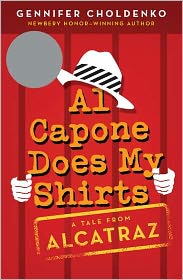


They selected this book because they noticed the Newbery Award on the cover and concluded it must be a good novel.  How can you argue with that logic?

I figure I won't finish all of them by Monday, but I can at least get part way through and stay a few chapters ahead of them!

(On the bright side, novel guides for these three books will be available within the coming month on my TpT site!).

On that note, I say goodbye for the weekend and am off to read!

Monday, September 23, 2013

Small Literature Groups

While typing up notes for a novel unit on TpT, I realized I needed to revise my SG notes.  What worked for me my first and second year of teaching doesn't work for me now.

When reflecting on my teaching, I often come back to one of my favorite quotes by Maya Angelou: 

"When you know better, you do better"

Well, I'm going to do better.  I revised my units to add  in answers and increased the complexity of the questions by making them more open-ended.  I also included suggested homework questions for students.  These revised units are available on TpT.

I always have my students divide their notebooks into four sections:

I give them four questions to answer based on the chapter(s) for homework and we discuss those in depth.

For my small groups, I have them keep track of characters, analyze shifts in setting and make note of interesting vocabulary words in their small group notebooks.


We spend most of our time in our group meetings digging deep into the text.  I check their notebooks, set them up for the next discussion (usually allowing them to decide how much they want to read because I set the minimum) and then dive into the text.

Since I have six groups and only an hour each period, I can't meet each group every day. 

Here's our run-down:

First 8 minutes: fluency.

Students work with a partner to "buddy coach".  I set the timer for one minute and half the class reads in a whisper to their coach.  The coach keeps track of errors and at the timer, gives feedback on rate, expression, accuracy and phrasing.  After one minute of coaching, the students track their progress on this chart (from the CORE sourcebook).  Then they switch roles and repeat.

My beloved:
(yes, I'm a little type-A with my tabs)

I get my leveled fluency passages from reading A-Z but I know there are lots of websites and teacher's guides available.  I print them double sided so the students keep the passages for two weeks because that's better for our planet.

They chart on their fluency tracker:


After that, we spend a few minutes going over the week's phonics: Greek & Latin roots.
We look at the roots, add them to our anchor chart and then decompose multisyllabic words to decode the word's meaning.

From there,  I divide the remaining time in two and start pulling my groups.  I leave 2 minutes at the end for clean up and transition time.

To make sure all my groups get equal time at stations, I make this chart for my lesson plans:

That way I can make sure all my groups get the same centers.

This week, our stations are:
1. Fluency binder (like buddy coaching except they select the passage and can work in groups).  I've printed poems, songs, speeches and passages for students to read and buddy coach with.  I used FCRR printables to have students guide their discussions.


2. fluency quiz-quiz trade cards: they rate each other on their expression and accuracy, using these guides which are glued in their notebooks:


3. character jenga (I upcycled a jenga game and put open ended discussion questions for students to quiz each other).  This one gets a little loud but I love the discussions students have with one another about the book so it's worth it.


4. Kidblog.  This great, free resource allows students to respond to each other and to my blog questions on a safe, secure site:


If you view our page, that's all you see.  Students need a log in (their id numbers) and I get full approval of their posts.

5. "build-a-word": They take syllables and create multisyllabic words, recording their answers in their notebooks.  


6. "word-o-matic" (an FCRR center) where they create words.  I printed vowels on one color and consonants on another to make for easy clean up :)


Most of my centers are in manilla envelopes with instructions on sticky labels.  It helps keep students accountable for their behavior.

7.  Writing thank you letters for donor's choose :)  We got our new materials and love them! Thank you again donors!

8. Idiom cards: one of our new donorschoose centers to help with figurative langugage, which we've been working on during whole group reading!

I also posted our group norms:

I got this sweet card from a student today:


Happy reading!
-Ms. Vice

Monday, August 5, 2013

Small Group Reading

Small Group Reading

Our school is fortunate enough to subscribe to Reading A-Z, which provides all sorts of great resources.  I am a fan of the leveled fluency passages, which I started using last year for timed repeated reading at the start of my small group reading block.  Students would whisper read for one minute, keeping track of their errors and charting their own progress.  As the week progressed, they would see their scores rise and begin to internalize why they should read at home both silently and aloud.

However, I noticed that not all of my students were being honest and accurate, so I've tweaked my plans to have them buddy read and buddy coach this year.  They will work with a partner (a new one each month who is in a different reading group) and provide feedback  for improvement.

I've used the Reading A-Z leveled readers for science lessons on heredity and genetics.  This topic isn't really covered in our text book, so we utilize this instead.  Students explore Punnet Squares, examine their own dominant and recessive traits, the works.  I like that the books have chapters, lots of informational text and plenty of text features to make the concept accessible to all my students.

I've used the books in small groups but didn't like how I would print fifteen pages (per student) and end up throwing them away.  Then I saw this idea on pinterest:

For some of the higher level books (W and up), I can print the books and keep them separated by reading level with different colored duct tape (which happens to be in the dollar bin at Target, score!).  That way the books can be used over and over again.

I also like this poster because even as fifth graders, they still need some reminders of what they're supposed to be doing.

 I'm excited for a new group of readers!

I also love doing things like this as easy rewards for my readers!


I can't wait for a new school year and a new group of readers!

Happy reading!