Showing posts with label metacognition. Show all posts

Tuesday, July 28, 2015

Try it Tuesday: In Kahoots with learning


I'm all about gallery walks and collaborative learning.  I've blogged about using cups as a response strategy and having students solve problems together for math review.  


However, I'm excited to take this to the next level with kahoot! 


I signed up for a free account and will create quizzes for my students.  They'll answer with the iPads and as a table group.  All they'll do is go to kahoot.it and log in with the code I give them (that I generate to go along with a specific set of questions.) 

It looks like this:


There is literally no way for them to mess it up other than typing in the code wrong.

From there, we'll make teams (usually the table teams since they're Kagan structured anyway).  From there, the game begins!  The quicker they answer will lead to more points for their team.    

Here's what a sample question looks like:


I'm also excited about using this to build metacognition for my students.  I can have them create questions for the class.  I can have them answer if the questions were too easy or too hard, and have them give feedback to me and to others.

In the fifteen minutes or so we played with kahoot, my brain began buzzing with possibilities.  This could be great for inspiring students to create really thoughtful, deep questions for one another about what they're learning.  They'll get to take charge of their own learning.

Will you be in kahoots with me this year to try something new to get your students excited about learning? 

Thursday, July 9, 2015

A Year in Reading Anchor Charts

I was *really* bad at uploading pictures of anchor charts this year (sorry guys).

As a result, y'all get the mega post with all of them! I took pictures so I'd remember for next year.  We make the charts with the students, so we don't reuse them over and over again.  I'll also upload the images to the "anchor charts" page with the blog.

Most of my anchor charts use multiple colors.  The black part is the part I read during a choral review on the carpet, the colorful words (key words) are what students read.  It's too overwhelming for them to read the whole poster together, but it's too boring if I read all of it.  It's our compromise!

Also, for the most part, my anchor charts are color coded.  This strategy helped my ELL students.  

My reading ones are blue.

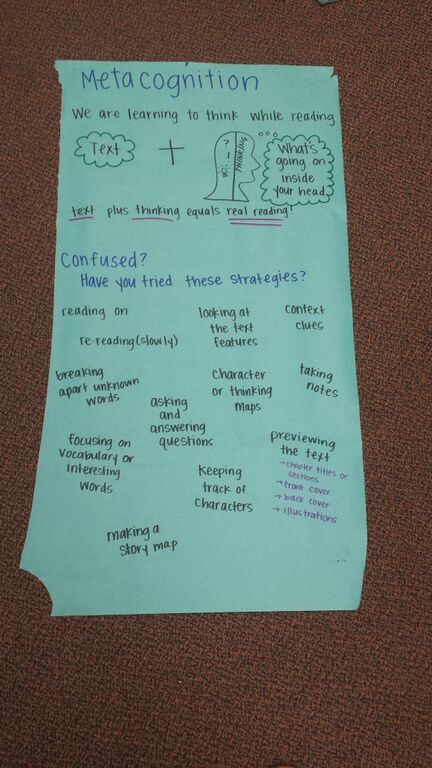
Metacognition and Annotating for Close Reads


RI 5.2


RI 5.3

This standard focuses on relationships between people, events, and ideas.  We modeled with Dr. King, Rosa Parks, civil rights, and the bus boycotts.  They had a lot of fun with this standard!


RI 5.5

The large poster in the middle is a copy of the graphic organizer that was in their notebooks.


RI 5.6


RI 5.8

This standard focuses on evidence, so I like the acronym.


Writing

Narrative Writing

Some of these ideas are borrowed from Being a Writer, which is one of the resources at our school site.


Expository Writing


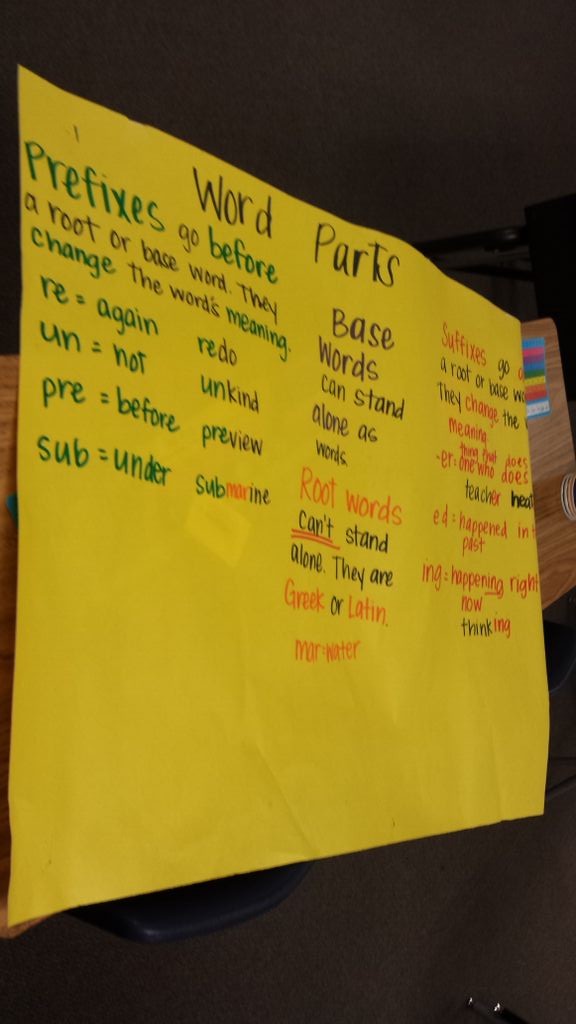
Word Parts

This technically fall sunder reading, but I chose to make all my RF (Reading Foundation) standards yellow.


I made this with my RTI group.  We also used magnetic word parts to compose and decompose words.

Oreo Reader

One of our strategies was teaching kiddos to be an "oreo" reader.  Basically we spent a lot of time modeling what it means to savor the text and really examine all the parts of a tasty book.


Inferences


Enjoy! 

Monday, September 1, 2014

Happy birthday to me! (day 4)

Day 4

I really didn't get much done before school because people kept popping into my room to wish me happy birthday, which I thought was very sweet.  My new grade level brought me balloons and cupcakes, along with decorating my room.  Wasn't expecting that from a team I've worked with for basically a week, but it's great to feel so welcomed.

In math, we talked more about persevering through problems, did our number talk, then I introduced them to one of my favorite math games 20 wins.  Basically they are placing digits (0-9) into boxes and trying to make a square equal 20 with any operations.  For the first day, I modeled with me against them before letting them try with a partner.


We came back together and talked about strategies that were used:


While they played, I walked around making observations.  For the most part, my class seemed very comfortable with addition strategies.  A few groups tried multiplication to make 20.  They'll play again tomorrow and their weekend homework will be to play with a family member.  I don't think I'll have much trouble getting them to want to play math games.

What they don't realize is how much math they're doing.  Yes, they're adding for the most part. But they're also thinking strategically and looking for patterns with numbers.  They're having to predict what their partners might do and prevent that from happening.  They're using multiple operations, practicing order of operations, and often times trying several different strategies until they can make 20.  I love tricking them into learning!

After that math fun, we went over phrasing with fluency.  I had them do a sort with their table teams to pre-assess them and for the most part, they know what fluency is so I'm not starting instruction from the beginning.  Of the four components of fluency (rate, expression, accuracy, and phrasing) I decided to model one.  If I modeled all 4 in one day, they'd be bored and probably confuse the components.  I'd rather go a little slower to make sure they've all got it.

I modeled several different times (incorrectly) and had them give me feedback.  They did a really good job with picking out the errors.  We made a chart together in our notebooks before moving to the carpet for today's skill lesson.

I modeled metacognition, which is thinking while reading, using The Lightning Thief.  The first time I read, I modeled great fluency.  Afterward, I asked them how I did to which they responded great!  Then I let them in on a secret: it's not enough to just read the words.  You've got to think about what you're reading.

I modeled again, this time tapping to the book whenever I was "in the text" and tapping to my head, modeling a think-aloud, whenever I was practicing metacognition.  I had two students keep score:


We talked about how we have to think while reading.  Some of them got it, some didn't.  That's okay, it's day 4.  We've got time. 


We also went over what it means to be a good reader, which was part of their homework:


I'm trying to color code my anchor charts (reading being teal) to help my students.  We'll see how long I can keep up this goal!  I had them brainstorm independently, talk as a table team, then add their thoughts on post-its.

In writing, they're continuing to work on their letters to self.  In science, they're having a great time with the mystery bags.  I also had them draw pictures of what a scientist is:


Then we had the conversation that women can be scientists too, since many drew men.  I talked about how I am a scientist whenever I step into the kitchen.  I am a chemist, hoping my ingredients combine the way they're supposed to.  I have to be accurate in my measurements and ensure my oven is preheated to the proper temperatures.  I test my experiments by eating them :)  I also shared that of the real chemists I know, the highest ranking ones are women.  This was very surprising for them but part of my job is to destroy their gender stereotypes about scientists.

All in all, it was a great day.  My biggest concern so far is I've had to move one student's desk twice already, but I think that's just an adjustment back to school and realizing my expectations of listening to instructions the first time they're given.  

Four days down!


Saturday, March 15, 2014

Metacognition

One of the new strategies I tried this year was modeling metacognition for my students.  In layman's terms, metacognition is being aware while reading or thinking while reading.

We've had a lot of talks that reading isn't a passive activity and your brain should be actively processing and thinking about what the words on the text mean.

Our very first reading lesson was using 2 bowls to show what was occurring in the text and in my head as I read aloud.


As a teacher, I'm quite used to modeling my thinking for my students.  Granted, the first times I felt a little strange having a conversation with myself but I got over that very quickly.

I modeled reading the back cover of The Lightning Thief since that was our first grade level read aloud.  I pointed to the back of the book when I was reading the text and to my head when I was thinking about what I read.

I had my students keep track of the number of times I pointed to the text and to my head with different colored markers.  Not only did it keep them on task and engaged in the lesson, but it let my wiggly students have a purpose for moving their hands around.

At the end of the lesson, they had way more green "thinking" markers then red "text" ones.  

We talked about how as readers, it's more than looking at the words on the page.  We have to actively process and think about what the words mean.  This lesson spanned a few days and we refer back to our anchor chart often, but I'm really pleased with my decision to start the year off with this type of lesson (since I'd never tried it before).


I'm way more excited that my students not only understand the definition and purpose of metacognition, but actively practice it as well.  When combined with annotating their thinking with stop and jot strategies, they are reading rock stars!  


Saturday, February 15, 2014

Annotating Their Thinking...

We've been working on "stop and jot" where students "read with a pencil" to record their thoughts.  Perhaps I've done too good of a job modeling my metacognition and what goes on inside my brain.

I was reading over their most recent tests and here are some favorites:

Text states: "Then, before flying a new airplane, NASA will test it in a wind tunnel to make sure it will fly as it should." (excerpt from What are Wind Tunnels? by David Hitt)

Her response? "oh, that's safe!"

There were also numerous "that's cool" and "that's big" comments, which made me giggle because this student legitimately got that excited on her reading test.

But my favorites:

Text states: "...some wind tunnels are made to test hypersonic speeds.  That is more than 4,000 miles per hour!"

Her response? "Oh, that's like how my mom drives."

Excerpt: "...the rebels didn't have enough gunpowder to shoot back." (from George vs. George)

Her response: "go buy some more, duh".  If only the rebels had it that easy!

Thank you child for your metacognition during testing.  I know you weren't trying to make me laugh, but you did.

Thursday, January 16, 2014

Echoing Green

For our intervention block this week, we've been working on reading strategies.  We went over how to record our thinking and that we read poems more than once.  

They did an awesome job finding the shifts in mood in the poem Echoing Green.  Last year our amazing coaches (M & G, love you both!) did a close read lesson with us with this poem.  Based on what they did with us, I had my students color the "happy" words in one color and the "sad" words in another color.  I was really impressed that collaboratively figured out that the poem is happy in the beginning and shifts to sadness toward the end.


I modeled on the smart board.


Their think sheet.


Kagan strategy of "pair up and share" to get them movin' and talking :)


Tomorrow we'll re-read the stanzas and talk about the theme.  Next week they'll create a written response about the poem.

They just get so excited about reading!


Saturday, January 11, 2014

Stop and Jot

I've had several trainings on Close Reading and having students annotate while reading.  While there is lots of different research, I'm going to zoom in on the importance of annotating.  Basically the goal is to get students to practice metacognition, or thinking about what they're reading while reading.  I want my students to move beyond simply reading the words and into thinking critically about what they read.  I want them to interact with the text.  One strategy is to "stop and jot".

Here's our "stop and jot" anchor chart:

(day 1)


(day 2)


You may notice it's not filled in all the way...that's on purpose!  Instead of teaching them all the symbols at once, they learn 1-2 at a time and immediately practice the annotating within text.  I have them work independently and then collaboratively with a partner!

We've been using this lesson idea in our intervention block.  Using this text, we gave students a different purpose for reading each day.  We stressed the importance of re-reading and I think they've done an awesome job with the lessons!


One of their tasks was to come up with alternative titles:


In doing so, they had to think about the main idea and justify their answer choice.

After day 1:


Students' example after day 3:


I had each student use a different colored pencil so there would be student accountability.


I think they're finally understanding that often times, you need to read the same text multiple times :)