Showing posts with label annotate. Show all posts

Saturday, August 15, 2015

Embracing the Doodle

One of the break out sessions from DENSI 2015 was on doodling as a strategy for note taking and I had the opportunity to try it out yesterday at my {math training}.

Before attending this training, I was skeptical.  I love note taking, but was worried students might be drawing and zoning out instead of doodling as a way to itemize what was important.  


Tracy, a fellow DEN member, shared two books on visual literacy that are pending in my Amazon cart.  

She mentioned that children start out as visual learners (pictures) and those pictures slowly fade away.  The argument is made (both by her and in a TED talk) about bringing back these doodles.

She shared that there are three distinct benefits:
1) Power:  Students feel in control with their doodles and take ownership over their notes.  I'd even have them share their doodles with one another.

2) Performance:  Connections are made between the brain's hemispheres during doodling, thus storing information in long term memory and leading to higher recall and understanding, which leads to higher performance.

3) Pleasure: It's fun to doodle.

(Example of a doodle from a TED talk)


For setting this up in the classroom, she focuses on stressing that this isn't drawing, it's doodling (so there is less pressure).

Here is her ice breaker to introduce doodling:

1) A pair of students share one piece of paper that is folded in half.
2) One student begins the drawing on the folded line by adding a simple shape.
3) For two minutes, students do not speak but build off of the picture.
4) After the timer, students share their work with their table team.

We'll be doing this activity during the first week of school!  Not only does it aid in team building, but also retention, helps students focus, and builds creative problem solving.  I'll also use it to discuss strengths and challenges, focusing on the next time it's done, it will be more comfortable because learning is a process.

She said the timer is set for two minutes, but not displayed to students.  Students should focus on each other, not how much time is left.

I gave doodling a try at my math training and enjoyed it. I am excited to give this a try with my students.  I think we'll start with doodling in pencil, then slowly add colored pencils as well.  Since my students share classroom supplies, I don't want the doodling to become a fight over specific colors. 

This is one of the new changes I'm trying this school year.  

What new strategies are you trying?

Thursday, July 9, 2015

A Year in Reading Anchor Charts

I was *really* bad at uploading pictures of anchor charts this year (sorry guys).

As a result, y'all get the mega post with all of them! I took pictures so I'd remember for next year.  We make the charts with the students, so we don't reuse them over and over again.  I'll also upload the images to the "anchor charts" page with the blog.

Most of my anchor charts use multiple colors.  The black part is the part I read during a choral review on the carpet, the colorful words (key words) are what students read.  It's too overwhelming for them to read the whole poster together, but it's too boring if I read all of it.  It's our compromise!

Also, for the most part, my anchor charts are color coded.  This strategy helped my ELL students.  

My reading ones are blue.

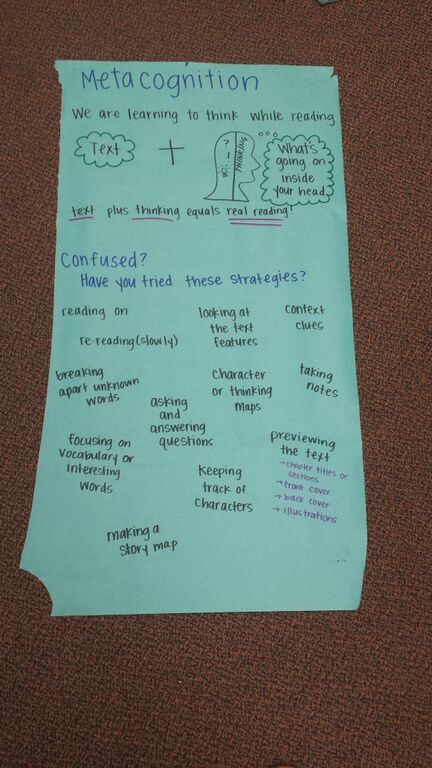
Metacognition and Annotating for Close Reads


RI 5.2


RI 5.3

This standard focuses on relationships between people, events, and ideas.  We modeled with Dr. King, Rosa Parks, civil rights, and the bus boycotts.  They had a lot of fun with this standard!


RI 5.5

The large poster in the middle is a copy of the graphic organizer that was in their notebooks.


RI 5.6


RI 5.8

This standard focuses on evidence, so I like the acronym.


Writing

Narrative Writing

Some of these ideas are borrowed from Being a Writer, which is one of the resources at our school site.


Expository Writing


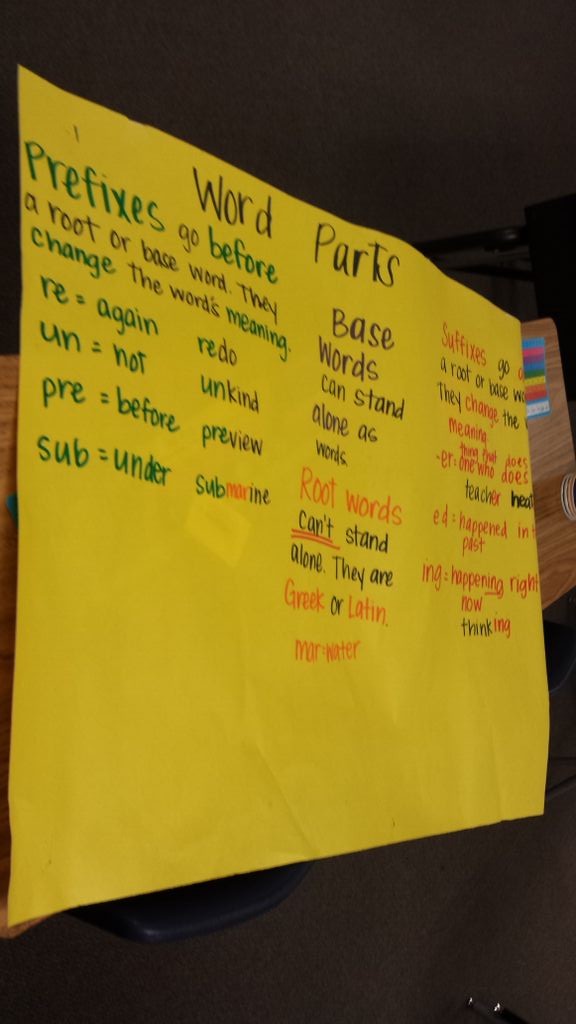
Word Parts

This technically fall sunder reading, but I chose to make all my RF (Reading Foundation) standards yellow.


I made this with my RTI group.  We also used magnetic word parts to compose and decompose words.

Oreo Reader

One of our strategies was teaching kiddos to be an "oreo" reader.  Basically we spent a lot of time modeling what it means to savor the text and really examine all the parts of a tasty book.


Inferences


Enjoy! 

Saturday, March 15, 2014

Metacognition

One of the new strategies I tried this year was modeling metacognition for my students.  In layman's terms, metacognition is being aware while reading or thinking while reading.

We've had a lot of talks that reading isn't a passive activity and your brain should be actively processing and thinking about what the words on the text mean.

Our very first reading lesson was using 2 bowls to show what was occurring in the text and in my head as I read aloud.


As a teacher, I'm quite used to modeling my thinking for my students.  Granted, the first times I felt a little strange having a conversation with myself but I got over that very quickly.

I modeled reading the back cover of The Lightning Thief since that was our first grade level read aloud.  I pointed to the back of the book when I was reading the text and to my head when I was thinking about what I read.

I had my students keep track of the number of times I pointed to the text and to my head with different colored markers.  Not only did it keep them on task and engaged in the lesson, but it let my wiggly students have a purpose for moving their hands around.

At the end of the lesson, they had way more green "thinking" markers then red "text" ones.  

We talked about how as readers, it's more than looking at the words on the page.  We have to actively process and think about what the words mean.  This lesson spanned a few days and we refer back to our anchor chart often, but I'm really pleased with my decision to start the year off with this type of lesson (since I'd never tried it before).


I'm way more excited that my students not only understand the definition and purpose of metacognition, but actively practice it as well.  When combined with annotating their thinking with stop and jot strategies, they are reading rock stars!  


Friday, January 31, 2014

Small Groups

Small group reading is my favorite part of my day because I love watching my young scholars get so excited about their novels!

I really like researching about new strategies and trying them with my small groups.  This week we used the stop and jot strategy with post-its:


I had my Number the Stars group focus in on the Nazi soldiers' midnight visit.  They recorded their thinking while reading and then used their recordings to guide their own discussions.

Homework:

I wish I had time to meet with them daily but I simply have too many groups to make that possible.  So we meet every 3 days and they have independent reading and homework in between:


I give them four or five questions to respond to and use evidence from the text to support their answers.  I love when they do such a great job with details!

They also are taking more ownership and creating charts about their novels:


Which we store in a magnetic bin at the front of the room.


I used a regular plastic bin and hot glued on magnets to make it work for my classroom.

I like how my students are so open to new ideas and strategies as well!  It's wonderful to keep learning together :)


Sunday, January 26, 2014

Character Analysis

In whole group reading, we've been working on comparing and contrasting characters.  In fifth grade, the expectation is to go much deeper then "one is a boy and one is a girl" responses. 

We've looked at how characters in the same text respond similarly and differently to the same event using Seed Folks as mentor text.

We've looked at how characters from different novels respond similarly and differently to a similar event using Tiger Rising, Because of Winn Dixie and Sarah, Plain and Tall as mentor texts with Rob, Opal and Anne.

We've moved on to looking at Matt and Attean in Sign of the Beaver and how they interact differently with the environment.

As you can see, I broke the reading into three sections.  I modeled the first day, reading the passage aloud and sharing my thinking (metacognition).


They worked with a partner or in a small group of three on part two and on Monday, they'll do part three independently.  They read the passage, take notes since they're "reading with a pencil" and then discuss their ideas.


They're taking notes in the graphic organizer we made in our whole group notebooks:


 While they work, not only are they building their stamina (since testing is a few months away) but I get to see how well they're doing with annotating (stop and jot) as well as analyzing the text. 


 It's a great way to do a quick informal assessment, I just walk around and make notes on a post-it.  I can also do a quick intervention if needed.
Some of them will struggle with this independent task and as I've said before, this productive struggle is perfectly okay.

I'm impressed with how well they're doing!


Thursday, January 23, 2014

Stop and Jot, part 2

We've had some trainings on close reading and one of the things I took away was teaching my munchkins to "read with a pencil".

Granted, this wasn't earth-shattering information, but rather an affirmation that I'm doing the right things with my reading groups. It's always a relief to hear that what I'm doing aligns with best practice theories.

Here's our "stop and jot" poster with when students should stop to record their thinking.


As you can see, there's lots of times students should pause to record their thinking!  I'm glad they're getting used to annotating and showing their thinking.

(We did review how to use post-its when it's a book you shouldn't write in as well!  They do love their post-its.)

Saturday, January 11, 2014

Stop and Jot

I've had several trainings on Close Reading and having students annotate while reading.  While there is lots of different research, I'm going to zoom in on the importance of annotating.  Basically the goal is to get students to practice metacognition, or thinking about what they're reading while reading.  I want my students to move beyond simply reading the words and into thinking critically about what they read.  I want them to interact with the text.  One strategy is to "stop and jot".

Here's our "stop and jot" anchor chart:

(day 1)


(day 2)


You may notice it's not filled in all the way...that's on purpose!  Instead of teaching them all the symbols at once, they learn 1-2 at a time and immediately practice the annotating within text.  I have them work independently and then collaboratively with a partner!

We've been using this lesson idea in our intervention block.  Using this text, we gave students a different purpose for reading each day.  We stressed the importance of re-reading and I think they've done an awesome job with the lessons!


One of their tasks was to come up with alternative titles:


In doing so, they had to think about the main idea and justify their answer choice.

After day 1:


Students' example after day 3:


I had each student use a different colored pencil so there would be student accountability.


I think they're finally understanding that often times, you need to read the same text multiple times :)