Showing posts with label mini-lessons. Show all posts

Thursday, October 5, 2017

Let's Taco About It

Yesterday was one of my favorite national holidays:


Okay, it's not really an official holiday but it's certainly one of my favorites.  

In honor of this awesome day, I decided to sneak in a mini math lesson on surveys, data analysis, and asking questions.

I posed three simple questions:

1) Where is your favorite place to get tacos?

2) What is your favorite filling?

3) Do you prefer hard or soft shells?

I had my students vote with a simple raise of their hands while I tallied the data on the smart board.  I modeled making predictions about what I thought would be the most popular answer and asking questions about the data.

Here are our results:


Afterwards, I asked them what the purpose of the lesson was.  Here's a sample of their responses:

-To let us practice having a voice
-To show us that it's okay to disagree
-To help us learn more about one another
-To practice asking questions
-To show that we don't all have to like the same things

Not bad for a fifteen minute mini-lesson.

Oh, and not to worry, I did participate:


Sunday, October 1, 2017

Writing Lessons

For me, writing is one of the hardest subjects to teach.  We don't really have a writing curriculum to follow (we don't have any curriculum, just standards), so we make it up on our own.

Luckily I have a great team and we work together well to share the responsibility of lesson planning.

Last year, I wasn't thrilled with my writing plans or instruction.  I was okay with writing, but it was the subject I'd often skip on days we had assemblies, project based learning lessons, counseling lessons, etc.  I think that dismissive attitude rubbed off on my students because they didn't seem to value writing either.

So instead of keeping with the status quo, I decided that this year I would be teaching writing first thing in the morning and do a more explicit job with modeling all steps of the writing process.  

I also made sure that if we skipped a day in writing, we skipped math or reading the next time.  More importantly, I verbalized this skip and why to the students.  I think there is value in them hearing me state that all subjects are important and that's why we take turns skipping them when other things arise.  

I also am explicitly teaching language mini-lessons instead of having them sprinkled throughout the writing instruction.  Fifth graders could handle these sporadic truth bombs, but the third graders (at least my group) need a more systematic approach to language.

At seven weeks in, here's what we've covered:


They just finished their first papers (autobiographies) and we're transitioning into personal narratives.  We'll do a few short writes, focus on conclusions, character traits, adjectives, and more typing mini-lessons.

We'll also be doing the Monster Project, but more on that later!


Thursday, July 30, 2015

So...

So it's almost August and I'm painfully aware that soon I'll have to return to work.  I'll have to get dressed each day and wear shoes all the time. (Teacher problems, I know!)


I had such ambitious summer goals in terms of reading...and I haven't done much of it.  I also haven't done the long range mini-lesson writing plans that I'd planned...oops.


To ease back into the routine, I have:

-Started my first week lesson plans.  Granted, I only have math done...but I think that's excellent progress.  I have a rough sketch of what I'd like to do each day, but it's more just putting them into Curriculum Engine and figuring out what materials I need.

-Turned on my alarm.  Granted, Waffles gets me up around seven am most days so there hasn't been much sleeping in occurring over my summer break.   I don't think the adjustment will be too painful.

-Purchased a few classroom supplies.  I needed a new electronic pencil sharpener since the motor died in mine last year.  I also was running quite low on highlighters, so I stocked up on thirty of them.  Staples had supplies for much cheaper than other stores!
 
-We took Waffles for her first walk this evening.  I tried yesterday but we encountered a baby bunny and well, that was just terrifying for her.  Tonight both B and I were home, so after we conquered the harness, she went all the way around the block!  She's now exhausted.  She'll be getting a morning and evening walk to help her get out all of her energy.


-Bought new wedges for the first week of school.  Putting my best foot forward does include the best shoe (They were half off! Score!) I also gave myself a pedicure to match!


-Finished up some small classroom crafts.  I'm excited to get back in my classroom and organize my space!

-Start each day with a purpose.  I found this {helpful article} and I'm excited to give it a try!  I will never tackle everything on my work to do list and that's something I just have to be okay with.  This will help me with my anxiety about it.

Fellow teachers, how are you preparing for back to school?

Wednesday, July 29, 2015

A nice refresher

Besides conquering both laundry and an exciting day at Chevy (recall on my car, nothing major), my other goal for the day was to get started on my first week lesson plans.

While emotionally preparing to open Curriculum Engine (the site where we make & store our digital lesson plans), I got distracted on pinterest by preparing for your first week articles.  Most of them weren't that helpful, but I found this {one} that had some good points. 

Here are my favorite take-aways from the article:

#1: "Set up your classroom in an active learning format"

Fingers crossed the rumors are true and my projector got ceiling mounted over the summer!  I was spoiled with a ceiling mounted one for years and forgot how much I'd missed it.  Not having a desk or table in the center of the room really clears up space.  Not to mention I'd get to skip the daily (okay, several times each day) frustration of when a child accidentally (or sometimes on purpose) would bump the projector, causing the smartboard to need to be recalibrated.  Without the desk and cord set up (hello tripping hazard), I would be able to teach from the center of the room and strategically move closer toward off task students.

#2: Starting the day off with something other than roll call

We have our morning procedures (unpack, papers turned in, backpacks hung up, pencils sharpened, etc) and class jobs (lunch cards, attendance) but then we do our morning meme.  


Yup, we start our day off with a meme and it just sets everyone off on a good day.  Laughter is always good thing!  You can follow my classroom meme pinterest board {here}!     Plus if you've got a funny classroom meme, send it my way!

#3: Make Up work:

I've done the orange "while you were gone" folders and I haven't decided if I want to keep it again.  I already have them made, so that's a plus.  (Apparently I don't have a picture, but it's a florescent orange folder that says "we missed you".)
 
I like the idea of using a tub and putting a file in for each day in the month (1-31).  All extras would be filed there (minus one for me to use as the master copy if needed).  With this system, I'd only have to clean it out once a month :) 

#4: Class Norms:

Preach! This is one of our first week activities with a gallery walk.  I remake the class norms poster each year and have them sign it.  It helps with our buy in and provides a nice link to the US Constitution (when we get there in social studies).

#7: Noise

We are near a kinder classroom.  We do our best.  Sometimes there is just loud shouting, crying, and other unidentifiable noises so I just shake my head, try not to laugh, and remind them that I teach fifth grade for a reason. 

#9

We don't do questions stems per say, but rather accountable talk stems.  I want my students to answer in complete sentences and know that it's okay for them to disagree with one another as long as they do it in a respectable manner.

It started like this:
 

But has evolved to this:


I have these in my classroom at the front of the room.  They are color coded to help students know how to phrase their comments.  Accountable talk stems also help students listen to one another because I expect them to give credit to one another for ideas.

#11: Encouraging risks

I want to do more of this, but I'm not sure how.  Wheels in my brain are spinning, stay tuned!

#12: Self-reflection

I have them reflect on their learning throughout the day and we have class discussions after we try something new (particularly if it doesn't go exactly as I've planned).   I don't know if my fifth graders could handle a written reflection daily, but I like when they reflect upon their learning (which should happen often).  

#17: Blog

We've got a weebly and I hope I have more parent communication with it.  I'll be doing class dojo as well to foster communication with families.  I do want to turn some of the responsibility of blogging over to my students.  I think it'd be a great venue for collaboration as well as authentic writing.  They have an audience: their classmates and their families, so I think they'd do a good job trying to impress one another.  It'd also be a great way to imbed those mini-lessons on technology that are so important. 

#18: Class jobs

Again, amen! My first few years in the classroom, I tried to do all these things myself.  But fun fact: kids want to help!  Fifth graders are not too cool to be motivated by a high five or a sticker.  They want to feel in control and help, so I might as well turn some of the smaller tasks over to them.

I have 36 different classroom jobs and it helps me stay sane.  Obviously I can't have them grade essays, but I can have them remind me to take attendance, file nurse notes, lead the class in the pledge, pass out lunch cards and papers, and other small time-consuming tasks.  I like to set aside the last five minutes of the day (during our "pack and stack") for class jobs and tidying.  Another "negative Nancy" teacher has commented time and again that her students don't need classroom jobs and that things just magically get done.   I like structure and I don't think that's a bad thing.  We switch up jobs every month and I have students vote on their top five choices.  

#20: Learning Styles Assessment

I try to shape my lessons to hit multiple learning modalities (auditory, visual, kinesthetic) but it's nice for my students to realize what type of learners they are.  Most of them have never really thought about this before fifth grade, so it's nice for them to think about themselves as learners.  I stress that it's okay to be a combination of styles.  Knowing what "type" they are empowers them to take charge of their learning and that's never a bad thing!

What were your take aways from the article? Any "ah ha" moments?

Saturday, November 22, 2014

Said is Dead

Upon flipping through old posts, I found that almost exactly a year ago, I blogged about a "said is dead" lesson in my classroom.  I just delivered the lesson again in my classroom this year.  However, revising for better words for "said" is a lesson nearly 100% of the fifth graders need.

This year, I made some tweaks.  I paired this mini-lesson with another mini-lesson on dialogue and quotation marks.  This was a logical pairing that just took me a few years to figure out.

While I suggested this lesson idea at grade level planning, another teacher actually made the plans for it.  I was a little bummed when the plans turned out to be a piece of paper for them to glue into their notebooks.  

So I made my own plan and my kids did really well with it!

We glued the resource into our notebooks, but after we'd make lists together. I gave each team a different emotion or tone (happy, sad, angry, loud) to have them generate lists.  I then showed a few different images, like this one:


to have them create a dialogue between the characters (thus using the dialogue mini-lessons and quotation marks) and to replace said with more descriptive language.  

They did a free write for few minutes, then shared the words they used instead of said, which I recorded on the board.  They then shared their writing with a neighbor.

I like when they get so excited about what we're learning!  Although due to their excitement and chatter, we were a minute or so late getting out the door...oops!


Friday, February 21, 2014

Just between you and me...

I'm often conflicted about what to do when students finish a test early.  Most want to stand up, return their test, dividers, highlighters and grab a book to read.

In theory, this is wonderful!

However, when some of my fast finishers do this, it quickly motivates other students to rush through as well.  In their rushing, they often skip questions or make careless mistakes.  

So instead I've started having them reflect on their learning on the back of their tests.

I merely ask them to tell me their "clicks and clunks" or to write me a letter.  I clarify that the information stays between me and them.  Sometimes I let them tell me about the story they're reading, what's happening at home, etc.

Here were some responses I got after their comma test:


She's good.


She loves reading!


While another went in depth about each and every subject she has in school.


At least they're taking ownership of their learning!

Some other responses that aren't pictured included confusion about where to place apostrophies to show ownership.  So we had a quick mini-lesson to clear up that confusion!


Sunday, January 26, 2014

Opinion Writing

We are in the midst of Being a Writer's persuasive genre.  While this doesn't perfectly align with our standards, I'm still enjoying their suggestions.  For fifth grade, they're expected to write opinion pieces where they share their opinion and give factual reasons as support.  The persuasive component isn't a standard until sixth grade.

We've clarified the difference with the kiddos and let them know if they want to try to persuade their readers, that's just dandy.


We've also been doing mini lessons with commas:


They're doing pretty well with these language standards! I'm hoping they'll apply their knowledge in their writing, since that's a great way to see if they truly understand the skill.

I modeled writing my opening:


It really helps my kids to see my example and color code the different parts (opinion and reasons).

Yes, I wrote about football.  I think it's important to model real writing and for me, I would write about football.  It's more authentic because they know I'm passionate about my sports and as writers, we write about things we know.  I don't think they'd take the lesson as seriously if I wrote about why you should buy a pre-owned car instead of a new one.  Yes, I could write about how it's cheaper, etc but I wouldn't be super interested in the topic. It wouldn't feel genuine to me and they'd pick up on it.  It's important to bring a piece of yourself into the classroom and spread the joy of learning.

Friday, November 15, 2013

Dialogue

In writing this week, we were working on dialogue and narrative elements.

I wasn't a huge fan of the suggested mentor text from Being a Writer (no offense! I'm just not great at following programs word for word) so I made my own lesson.

We looked at the punctuation marks within our read aloud of The Lightning Thief:


I also pulled a student up to model what this conversation would look like when performed.  Some of my students had great "brain fireworks" as to the connection between literature and plays.

From there, we did a few quick writes based on images.

The third was the Manning Brothers before a Pro Bowl game:


They did such a great job with creating their own dialogue to go along with the images!

Happy writing :)

Wednesday, October 9, 2013

Verbs

My students did a great job with helping verbs yesterday:


Today's mini-lesson of linking verbs didn't go as great as I wanted, but linking verbs with conditions are a tricky concept for adults sometimes, so I shouldn't expect my students to master this concept on day one (even though I have some brilliant munchkins!).

Tomorrow and Friday we are doing a formative writing task, so our verbs mini-lessons will need to continue next week!

Tuesday, October 8, 2013

Verbs

One of our fifth grade standards is working with the three types of verbs: action, helping and linking.  Obviously this is too much for a single day of writing instruction, so we broke it up into 3 different days of instruction.

Yesterday, we worked on action verbs because that's what students are most familiar with:

Today, we worked on helping verbs:

One of my awesome coworkers found this helping verbs song to the tune of Jingle Bells:

My students are having so much fun with our mini-lessons on language :)  After our lessons, they revise their own work and are sharing their published pieces.  I really like that our Being a Writer  unit has built in time for students to share their work with others.

I'll post more pictures after our anchor chart is done :)

Saturday, September 7, 2013

Writing Portfolios

This year I'm having my students keep track of their writing with portfolios.

During the first week of school, I had them fill out a "me as a writer" sheet so I could start to plan out mini-lessons based on their needs.

I read through their writing struggles and made a list:


Luckily, a lot of these concerns are addressed in the CCSS so my instruction can be both standards-based and data-driven.

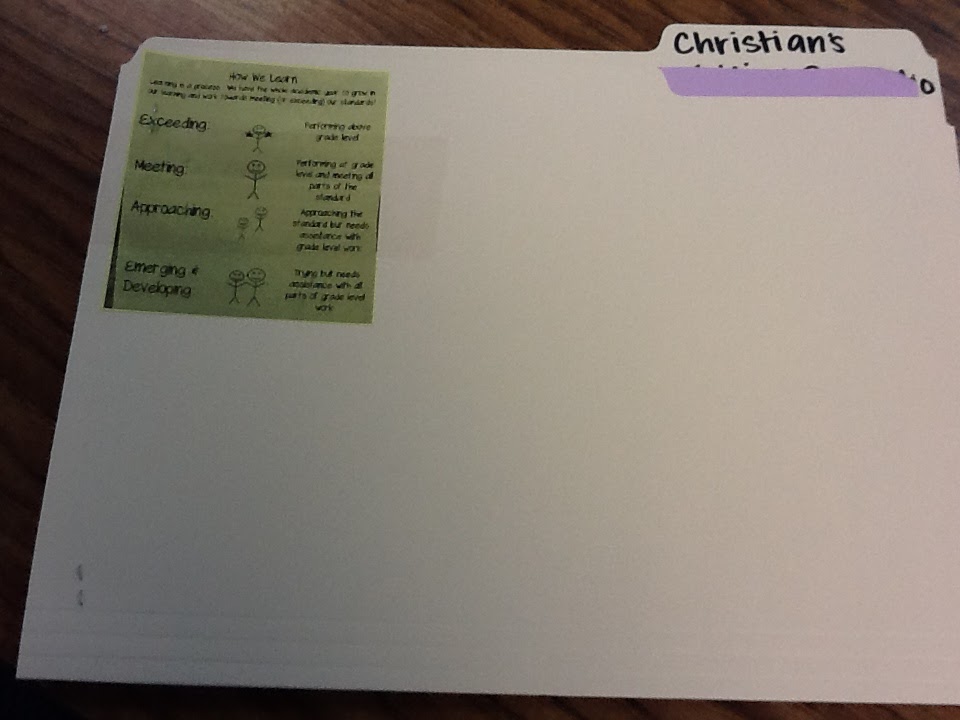
From there, I found a stack of manila file folders and stapled their sheets inside.

I then added a picture of this chart


about growth and mastery of standards to the outside of their folder:


For durability, I added some packing tape to make sure the growth chart was staying put!

Inside, I stapled a double sided chart of the common core writing and language standards so they could see exactly what we're working on:


We will talk about SMART goals after our diagnostic constructed responses this week.  Students will then generate their own writing goals, which will also be stapled into their portfolios.

Their portfolios can double as privacy shields during independent writing time for assessments.

I made a wordle out of their list of struggles with writing:


At least we have a very comprehensive list!  Plus, the largest issue of "big words" we are tackling right away with explicit phonics and syllable types :)

I turned that wordle into part of my bulletin board, but more on that later!

Wednesday, July 10, 2013

Mentor Text Ideas

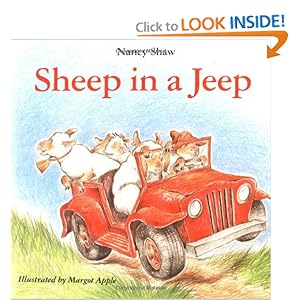
I love using picture books in my classroom. Yes, I know my fifth graders might seem a little old for picture books, but I only pick books with an academic purpose.  Sometimes the purpose is to introduce a concept, other times it is for a mini-lesson.

Here are some of my favorites :)

(Historical Texts)


This is great for discussing historical myths and the American Revolution.  The book talks about John Adams, Paul Revere, George Washington, Benjamin Franklin and Thomas Jefferson.  My students really like the story line and the book provides lots of factual information.  This book is highly recommended :)

This is out of date, but still good to review some of the older presidents:

Just make sure you mention President Barack Obama as well!

This is another great book by one of my favorite authors.


This book addresses the issue of slavery.

(Science Texts)


This is great to review the concepts of force and motion.  I had students follow along with toy cars at their table teams and discuss what would happen next.  We reviewed friction, inertia and Newton's Laws of motions.  Not bad for a picture book!
Bonus: here is the story on you tube :)

This goes great for environments and food chains.

The book lends itself well to discussions and the creation of food webs.


(Writing Texts)


Students not only loved the plot of this story,  but that they could interact with the text by editing for punctuation. After reading this, I displayed the image under the ELMO and my students worked in table teams to return the missing punctuation to the story to add meaning.  They got super excited about editing, which is always a  plus!

This one is great for persuasive writing and students can really relate to the premise!

This cute picture book is great for homophones!

This book looks at the importance of word choice which helps all writers improve!  

This can also work for vocabulary and shades of meaning, both of which are concepts that many students struggle with in the upper grades.

Reading Texts


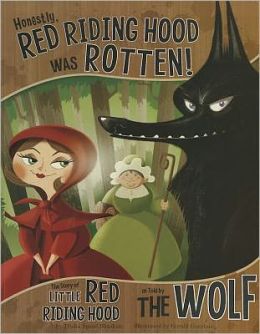
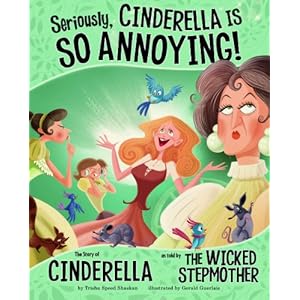
I used these books to discuss alternative points of view and how the narrator's perspective shifts the story (aligning with RL5.6).  These books were highly amusing and prompted my students to want to re-write their own versions of their small group novels.  For example, one group rewrote part of Harry Potter from Draco Malfoy's perspective.  I also loved that there were four different books providing a different mentor text for almost the entire week.  Repeated exposure really helps solidify the concepts!


For helping students make inferences, I'd recommend this book:


Students have some great discussions on this book :)  Bonus, you can review the seasons!

This book serves two purposes, which is great because time is always limited.


You can use this picture book to review text structure as well as punctuation.  I love when reading and writing align!

The next books are great for vocabulary acquisition, which is part of the Common Core State Standards:


The importance of vocabulary in a fun way :)


This book is sure to inspire your class (or school) to have their own vocabulary parade!  For more information, visit the author's website here.

To review the importance of using reference materials, I'd recommend:


Just make sure your students know not to eat books :)

This gem is self explanatory

but still works as a great review for genres.

Math

Place Value:


This book nicely combines science visuals of the universe and math concepts of place value.  I use this at the beginning of the year to build background knowledge and as a formative assessment to see students' understanding of number sense.

Beginning of the Year Classics

Ms. Nelson is always a classic!

I read this book in the first few days of school (while wearing a black dress of course!) and discuss classroom rules.  It's a great introduction to classroom norms and community building.

I love this author and this book does a great job of addressing different student learning styles.

We discuss that learning is a journey and some students just need more time than others.

To help students deal with their emotions appropriately, I always read

during the first week of school.  Students then brainstorm ways that they can deal with their own terrible, horrible, no good, very bad days.  I took the concept of an Alexander day one step further by making Australian flags.  If students are having one of those days, they simply place a flag on their desk to indicate to others that they are feeling sensitive.  My students really responded well to the idea and didn't abuse the flags.  Here is another example of a teacher using the flag concept:


We also read

and discuss the importance of individuality.  Plus it's a great way to apologize to students for accidentally mispronouncing their names!

Another great read for social responsibility and classroom rules is:

I'd highly recommend this book because it forces students to look at their own behavior and accept responsibility...a social skill that often needs fostering :)

This is slightly juvenile, but does a great job at stressing the difference between tattling and informing.

We all want safe classrooms, but students also need to learn to solve some of their own problems.

I love this book not only to briefly review land forms, but also to reinforce norms for listening and speaking:

Students often have volcano-like mouths but this book helps highlight the importance of taking turns.


What suggestions would you add?
-Ms. Vice