I just finished grading my students' writing proficiency exams. (Yes, teachers grade these. No, we aren't paid to do so, it's just something that's expected to get done.)
Some of them did a great job with their expository pieces. For their task, they were given two short informational articles to read and respond to. In their responses, they were expected to refer back to the text for evidence and write with a problem and solution text structure. This was their end of year task.
However, upon grading these papers, I became increasingly disappointed. This frustration during grading is one of the hardest things for a teacher. The "I know I taught you this!" runs through my mind quite frequently. There were lots of careless mistakes by many of my students.
One turned in two drafts, basically saying pick which one is better.
One wrote a single paragraph. Not once in the past ten months of school has a single paragraph been a satisfactory answer.
Several turned in work that wasn't complete.
One used no punctuation whatsoever.
One wrote "thank you for reading my paper" while another ended with the dreaded "I hope you like it." Neither of these are appropriate closings. We've addressed both of these big writing no-no's on every single paper we've written. These two clearly didn't listen.
Another decided not to use any paragraphs, another wrote no name, another went completely off topic and the final completely disregarded the audience and wrote as if she was writing to her friends and not a formal piece of academic work.
Not a single one used the sentence stems for quoting accurately from a passage. The sentence stems we went over and have been using all year were completely disregarded.
This is frustrating as a teacher. I feel disappointed in their essays. They rushed and I have to score them lower then I'd like because of their silly mistakes. This is one of the hardest parts of being a teacher.

Showing posts with label feedback. Show all posts
Showing posts with label feedback. Show all posts
Sunday, May 18, 2014

Saturday, March 22, 2014
These are my students, round 3
Our awesome counselor started an after school peer support system with our fifth graders. Her goal is to have some of the higher students help the struggling students with organizational skills and academics. The program is a few weeks old but our counselor is receiving lots of positive feedback from the students. Having a peer assist them privately after school is ideal because one, it's not a teacher so they feel they can connect better without feeling frustrated and two, it's a private support system where no one has to know. As far as the rest of the grade level is concerned, it's a homework club...which is partially true.
One of my students from my small groups was assisting another student with his fluency. He was giving him productive feedback as we've practiced, but then privately asked our counselor this:
"Should I model first, so he can hear what good fluency is like? I've been working on my phrasing."
I love that it's ingrained in them to model a skill or strategy first so that students know what is expected. Considering I model different skills daily, I'm glad the importance of this explicit instruction is sinking in with my students.
Another one of my girls not only made her peer mentee a homework folder to keep himself organized, but she also assigned him homework. Yes, she found her old fluency practice passages and instructed him to read them nightly and keep track of his errors. Furthermore, she created a survey for him about his strengths and weaknesses so she could better assist him. She also wouldn't accept "reading" as his answer for what he was struggling with. Oh no, she flat out told him to "be more specific". I'm not sure he appreciated it, but I sure did!
This must be what mothers feel like.
My students are verbatim, echoing things I say on a nearly daily basis. They are internalizing the need, as a teacher/mentor, to provide positive, concise feedback, model strategies, help with organizational structure and be reflective about one's own learning.
I've created little minions. I couldn't be more proud that not only are they willing to help their peers, but they have productive strategies to do so. I love that they're willing to help their peers succeed as well. High fives for team work.
Tuesday, March 11, 2014
Book Recommendations
In our small groups this week, one of our must do activities was to create a book recommendation for another student or a teacher.
I modeled writing to a fellow teacher about why she should read The Lost Hero. My kiddos had a lot of fun with it.

I modeled writing to a fellow teacher about why she should read The Lost Hero. My kiddos had a lot of fun with it.
I found this note from a student in the dropbox. I particularly enjoy the "if you read it, I'll read it" part.
Saturday, February 8, 2014
Character Traits Cards
We've been doing a lot of work with comparing and contrasting in our small groups.
I've been using character trait cards to help my students build their vocabulary. Instead of using "dead words," they are focusing on that juicy vocabulary when describing their characters.

I gave them a pack of trait cards and had them discuss as a group which descriptions would align with the characters in their small group novels. They also had to justify to me why they'd use those specific character traits.
From there, they added the words to their individual character maps:

Then combined their thinking on their group chart:

Due to space, I've been sending them into the hallway to work. I've got the door propped open and I can see them at all times, so that's not a safety concern. That way they can talk in a whisper (or as much of a whisper as excited ten year-olds can manage) and not disrupt those students who are silently reading.

I had another teacher listen in on them while she was observing a classroom and I loved her positive feedback. Not only was my Harry Potter group on task the entire time (which is a feat within itself!) but they were using those descriptive words to compliment one another.
She specifically remembered: " (Student's name), you are just as smart as Hermione!"
So cute.
I'm proud of them for really trying to be kind to one another, even when they don't think any teacher is watching. Well done fifth graders!
I've been using character trait cards to help my students build their vocabulary. Instead of using "dead words," they are focusing on that juicy vocabulary when describing their characters.
I gave them a pack of trait cards and had them discuss as a group which descriptions would align with the characters in their small group novels. They also had to justify to me why they'd use those specific character traits.
From there, they added the words to their individual character maps:
Then combined their thinking on their group chart:
Due to space, I've been sending them into the hallway to work. I've got the door propped open and I can see them at all times, so that's not a safety concern. That way they can talk in a whisper (or as much of a whisper as excited ten year-olds can manage) and not disrupt those students who are silently reading.
(Silently reading and going back to the text for evidence? Score!)
I had another teacher listen in on them while she was observing a classroom and I loved her positive feedback. Not only was my Harry Potter group on task the entire time (which is a feat within itself!) but they were using those descriptive words to compliment one another.
She specifically remembered: " (Student's name), you are just as smart as Hermione!"
So cute.
I'm proud of them for really trying to be kind to one another, even when they don't think any teacher is watching. Well done fifth graders!
Wednesday, January 1, 2014
Thank You
I'm working on appreciating the positives and acknowledging others. Thank you, blog readers. I know all the page views aren't spam :) (Feel free to leave comments though!)

Thank you to the nearly 300 customers I had on TpT last year. It was a very good start and I received a lot of positive feedback, which validates that the hard work I put in for my classroom is beneficial for others. Why reinvent the wheel? If I've put in the work with my students, why shouldn't other educators gete to use these materials?
Thank you to the almost 60 people who have taken the time to rate my products on TpT and left comments. I've got a 3.8/4 rating and 9 followers, which I appreciate!
Thank you to those who have shared my blog on pinterest or on TpT :)
Just overall, thanks and high fives/fist bumps to my readers and supporters.

I look forward to a new year of continuing to improve as an educator!
Saturday, November 23, 2013
202!
As of this morning, I've sold 202 products on TpT with hundreds more in free downloads!
I'm really glad that I can share the products I make for my students with others around the country.
Thank you to my followers and for those of you who have rated my products and given feedback. I read every suggestion and am continually trying to improve as an educator.
If you haven't looked at one of my freebies, I encourage you to do so (and rate it)! It's free to sign up for a TpT account and you get ten free downloads a week, which is pretty great too.
More products will be coming soon, report cards just take a higher priority! :)
I'm really glad that I can share the products I make for my students with others around the country.
Thank you to my followers and for those of you who have rated my products and given feedback. I read every suggestion and am continually trying to improve as an educator.
If you haven't looked at one of my freebies, I encourage you to do so (and rate it)! It's free to sign up for a TpT account and you get ten free downloads a week, which is pretty great too.
More products will be coming soon, report cards just take a higher priority! :)
Tuesday, October 15, 2013
Posters
I'm pretty sure I spent my entire prep today working on anchor charts.
Here are some updated images:
Our phonics wall:

We've been working on /s/, /z/ and /ch/ sounds this week. I'm trying to use different colors each week for our phonics skills so that students know where to look.
Here is our updated writing genres poster (Being a Writer):
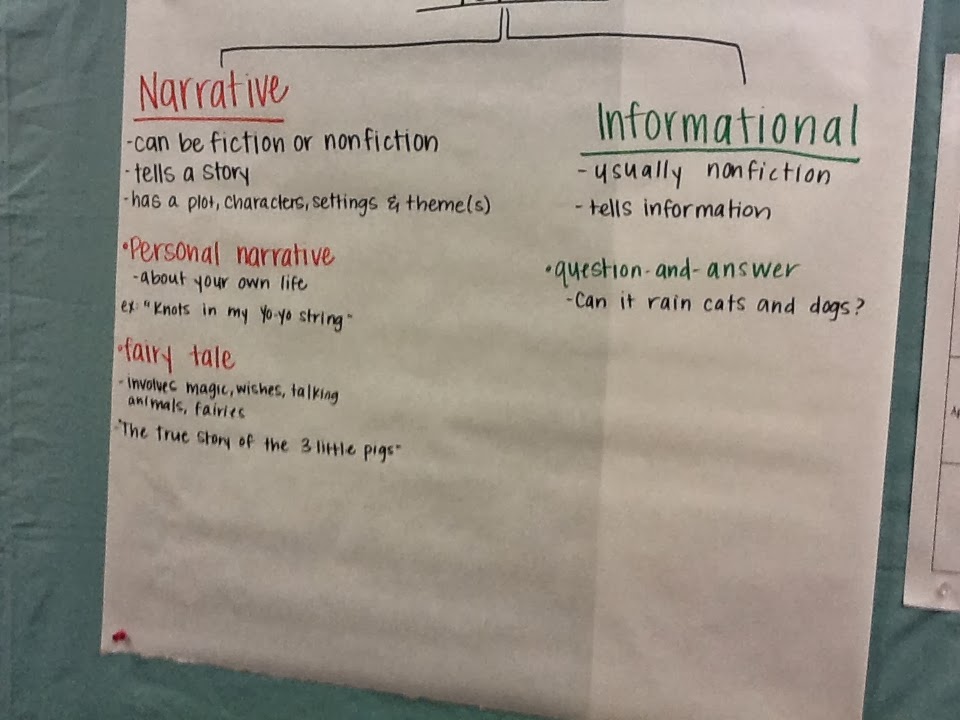
We're working on narratives during this writing unit. We also just got new writing partners, so hopefully that help our writing time.
We also are working on buddy coaching for writing and fluency:

So I made a new pink sign to guide their conversations.
Here is another chart to help them with their partner conversations:

It was created for writing but can work for other academic subjects as well.
Next, here is our sentence starters:

In fifth grade, some of our standards (RL 5.1/RI 5.1) require students to "quote accurately" and "make inferences" from literature and informational text. We have been working on responses to literature and constructed responses, so hopefully this will help my students with their answers.
Lastly, I changed the background on my classroom blog:

It's polka dots :)
Monday, September 23, 2013
Small Literature Groups
While typing up notes for a novel unit on TpT, I realized I needed to revise my SG notes. What worked for me my first and second year of teaching doesn't work for me now.
When reflecting on my teaching, I often come back to one of my favorite quotes by Maya Angelou:
"When you know better, you do better"
Well, I'm going to do better. I revised my units to add in answers and increased the complexity of the questions by making them more open-ended. I also included suggested homework questions for students. These revised units are available on TpT.
I always have my students divide their notebooks into four sections:

I give them four questions to answer based on the chapter(s) for homework and we discuss those in depth.
For my small groups, I have them keep track of characters, analyze shifts in setting and make note of interesting vocabulary words in their small group notebooks.


We spend most of our time in our group meetings digging deep into the text. I check their notebooks, set them up for the next discussion (usually allowing them to decide how much they want to read because I set the minimum) and then dive into the text.
Since I have six groups and only an hour each period, I can't meet each group every day.
Here's our run-down:
First 8 minutes: fluency.
Students work with a partner to "buddy coach". I set the timer for one minute and half the class reads in a whisper to their coach. The coach keeps track of errors and at the timer, gives feedback on rate, expression, accuracy and phrasing. After one minute of coaching, the students track their progress on this chart (from the CORE sourcebook). Then they switch roles and repeat.

My beloved:

(yes, I'm a little type-A with my tabs)
I get my leveled fluency passages from reading A-Z but I know there are lots of websites and teacher's guides available. I print them double sided so the students keep the passages for two weeks because that's better for our planet.
They chart on their fluency tracker:

They chart on their fluency tracker:

After that, we spend a few minutes going over the week's phonics: Greek & Latin roots.
We look at the roots, add them to our anchor chart and then decompose multisyllabic words to decode the word's meaning.
From there, I divide the remaining time in two and start pulling my groups. I leave 2 minutes at the end for clean up and transition time.
To make sure all my groups get equal time at stations, I make this chart for my lesson plans:

That way I can make sure all my groups get the same centers.
This week, our stations are:


2. fluency quiz-quiz trade cards: they rate each other on their expression and accuracy, using these guides which are glued in their notebooks:


3. character jenga (I upcycled a jenga game and put open ended discussion questions for students to quiz each other). This one gets a little loud but I love the discussions students have with one another about the book so it's worth it.

4. Kidblog. This great, free resource allows students to respond to each other and to my blog questions on a safe, secure site:

If you view our page, that's all you see. Students need a log in (their id numbers) and I get full approval of their posts.
5. "build-a-word": They take syllables and create multisyllabic words, recording their answers in their notebooks.


6. "word-o-matic" (an FCRR center) where they create words. I printed vowels on one color and consonants on another to make for easy clean up :)


Most of my centers are in manilla envelopes with instructions on sticky labels. It helps keep students accountable for their behavior.
7. Writing thank you letters for donor's choose :) We got our new materials and love them! Thank you again donors!
8. Idiom cards: one of our new donorschoose centers to help with figurative langugage, which we've been working on during whole group reading!
I also posted our group norms:

I got this sweet card from a student today:

Happy reading!
-Ms. Vice
Monday, August 5, 2013
Small Group Reading
Small Group Reading
Our school is fortunate enough to subscribe to Reading A-Z, which provides all sorts of great resources. I am a fan of the leveled fluency passages, which I started using last year for timed repeated reading at the start of my small group reading block. Students would whisper read for one minute, keeping track of their errors and charting their own progress. As the week progressed, they would see their scores rise and begin to internalize why they should read at home both silently and aloud.
However, I noticed that not all of my students were being honest and accurate, so I've tweaked my plans to have them buddy read and buddy coach this year. They will work with a partner (a new one each month who is in a different reading group) and provide feedback for improvement.
I've used the Reading A-Z leveled readers for science lessons on heredity and genetics. This topic isn't really covered in our text book, so we utilize this instead. Students explore Punnet Squares, examine their own dominant and recessive traits, the works. I like that the books have chapters, lots of informational text and plenty of text features to make the concept accessible to all my students.
I've used the books in small groups but didn't like how I would print fifteen pages (per student) and end up throwing them away. Then I saw this idea on pinterest:

For some of the higher level books (W and up), I can print the books and keep them separated by reading level with different colored duct tape (which happens to be in the dollar bin at Target, score!). That way the books can be used over and over again.
I also like this poster because even as fifth graders, they still need some reminders of what they're supposed to be doing.

I'm excited for a new group of readers!
I also love doing things like this as easy rewards for my readers!

I also love doing things like this as easy rewards for my readers!
I can't wait for a new school year and a new group of readers!
Happy reading!
Subscribe to:
Posts (Atom)