Spring (and its allergens) have officially hit Las Vegas. It's pleasantly in the 80s and that magical time of year when I need neither the heat nor the air conditioning on inside. I simply open the windows, run fans, and the temperature is fabulous.
We've taken the students outside to read a few times because it's so lovely outside.
This gorgeous weather makes for irksome behaviors and lots of parent teacher conferences.
While most of the country has already had spring break, we are sitting at five days out. Five long days.
Here's the gist of what's causing their spring madness:
1) The fifth graders are getting the elementary version of island-fever.
They've been to their middle school (which is across the street) and registered for next year's classes. They've seen all the clubs and activities that are available to them as sixth graders. Most are starting to experience puberty and all the roller coaster emotions (and smells) that accompany these natural changes. They feel they've outgrown elementary school and are ready for the next step. Some are excited while some are terrified. I've set out my "how to deal with middle school bucket" and made myself available at recess to talk about middle school myths.
2) Testing season is soon.
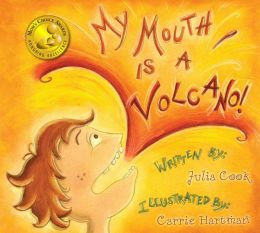
We have a large pep rally soon and the primary classes are adopting the intermediate ones to sponsor with messages and little treats. I will be digging out this:
to read to them. We'll be talking about testing strategies and crossing our fingers for perfect attendance. This year we'll be taking the SBAC, which is all online...which presents a whole new set of problems.
3) Their emotions.
I find that i need to, on an almost daily basis, re-establish our classroom norms. On any given day, I say any (and all) of these things:
No child, you can't stand up and run out of the classroom bawling hysterically. If you don't feel well, ask for a nurse pass. I am not a mind reader.
No child, you can't choose to do none of your work and still expect a reward.
No child, you can't roll your eyes at me and expect me not to call you on that. There will be a card change and a hallway conversation.
No child, you can't pull your tooth out and bleed all over your test as a strategy to get out of taking it. A clean, blood-free one will be waiting for you when you return from the nurse.
No child, you can't take a bathroom break right when the class returns from recess.
No child, you can't try to sneak off for a ten minute bathroom break every time we are ready to take a timed math quiz.
No child, you can't try to use the bathroom three times in the afternoon because you don't want to read your book. If you keep asking, you're going to the nurse because something may be medically wrong if you insist you must use the bathroom every twenty minutes.
No child, you and your best friend can't both go to the bathroom together. I'm female, I know you want to go outside and giggle. One at a time, nice try.
4) The excitement.
We've got several guest speakers lined up. Field day is this Friday. We're watching The Lightning Thief in the morning (because we finished the novel) before doing this activity as a table team. Math is hands-on and reading is integrating history (American Revolution). They are simply so excited about every thing we are doing. Every little thing.
You know when Oprah would give away free things and the audience goes absolutely wild? That's what teaching fifth grade is like. It's exhausting.
Five days. I can do this!
Showing posts with label mentor text. Show all posts
Sunday, March 22, 2015
Thursday, September 25, 2014
Anchoring Our Learning
It's time for an anchor chart update!
My walls have quickly been overtaken by colorful anchor charts to guide our class discussions. This year I'm trying something new and color coding my charts. My math ones are pink, my reading ones are blue, my reading foundation skills (fluency, phonics) are yellow, and our read aloud mentor text ones (for The Lightning Thief) are white.
Our close read poster:
They're doing a really good job with this skill this year!
My walls have quickly been overtaken by colorful anchor charts to guide our class discussions. This year I'm trying something new and color coding my charts. My math ones are pink, my reading ones are blue, my reading foundation skills (fluency, phonics) are yellow, and our read aloud mentor text ones (for The Lightning Thief) are white.
Our close read poster:
They're doing a really good job with this skill this year!
Wednesday, August 27, 2014
Year Six, Day 2
Day Two
With no duty to be had and the kinks from yesterday all worked out, the morning ran much smoother.
We started our day with this meme:
Before I showed them the wordle from their first day feelings exit tickets:
I was pleased many of them wrote in complete sentences. My favorite may have been the child that just wrote "I'm satisfied." I still have a few that are nervous, but that's to be expected.
We went over more classroom procedures, did our number talk (which lead to some awesome discourse about making sense of problems!), made our class norms with a gallery walk, and did another read aloud:
This mentor text focuses on life skills and provides strategies on not erupting (interrupting). Again, most of them had never heard this book so I'm on a roll!
Can't wait to read this gem on day 3!
I did make my first student cry. Yes, we made it through a day and a half of fifth grade before there were tears.
He had his phone out and in his words, was just looking at the time. Since his back was to the wall, I chose to believe him. We had a conversation in the hallway because it's not a conversation for the whole class. He apologized, we talked through strategies (look at the clock, keep phone in backpack), and I moved him seats so he would face the clock. I gave him his phone back at the end of the day, but there were still tears.
I guess the honeymoon is over?
Day three is a weird day. We'll tackle second prep and our first assembly. Fingers crossed!
Tuesday, August 26, 2014
Year Six, Day 1
The weekend before school started, I was a wreck. I worked Friday night on various small tasks for my classroom, took all of Saturday off to spend with friends, and worked for a little bit Sunday morning before heading to B's family's BBQ. Sleep did not come easily Sunday night and nightmares of past students and worst case scenarios flooded my mind.
I got to work about seven am on Monday. Our start time is 8:26. My first task was hanging our classroom pom-poms:
I had duty (bummer) and I struggled with undoing the folding gate. See, the gate was run over by a (rude) parent, so it's bent in a strategic way. This means it doesn't fold up nicely and has quickly become my new Monday/Friday morning nemesis.
Luckily a parent helped me wrestle the gate. I was also burdened with both a stop sign and radio, so next time I'll not carry those. Or wear open toed shoes.
My other job at duty was to help direct drop-off traffic. We have a lot of red curbs in front of our school and I had the unfortunate job of trying to tell parents not to park. These parents were obviously very excited for the first day and taking pictures of their kiddos in front of the school. I had to be the bad guy and ask them to not capture this precious moment.
I went to the wrong spot to find my class and our line got bisected when we were entering the building. I forgot to collect lunch money and we were a few minutes late to specials, after I tried to take them down the wrong way.
Thank goodness for first prep! I took a few deep breaths, calmed myself, and proceeded to tackle my to do list.
The rest of the day was smooth sailing :)
I had 27 students show up and they were talkative from the first moment. They're responding really well to my positive classroom vibe, which is good. Considering how frustrating last year was, I'm determined to stay positive. I want my room to be a joyous place.
I didn't spend hours on procedures. I gave them a first day treat. We covered a lot (norms for read alouds and number talks), learned some procedures, and practiced structures like Kagan pair up and share.
We read First Day Jitters, which many of them had never heard before.
It's a cute picture book with a fun twist at the end. (Spoiler--the teacher doesn't want to go to school!)
Prior to reading, we went over read aloud norms:
I was a little worried about some of their initial responses. I asked what my job was during a read aloud and the first response I got was "to grade papers."
Um...no.
I clarified that during a read aloud, I was the one reading. They were dumbfounded by this notion and asked when I would grade. I told them they wouldn't see me grade in the classroom unless it was a one on one assessment (Aimsweb, Core phonics, etc). They were bewildered and asked when I would get their stuff done. I said at home, in front of the TV, or while they're at specials. This seemed to satisfy most of them, but that does worry me...
A teacher shouldn't be known for spending hours of in class time grading. Yes, it happens. But that shouldn't be what your students expect you to do.
Instead of me giving a tour of the classroom, I sent them on a scavenger hunt:
It's way more fun when they investigate! Plus it gets their bodies up and active, which is crucial.
I went over the hand procedures for number talks and then made an anchor chart about the strategies they used:
After we did our number talk, I had them create their fractional me sheets:
They had forms for homework and left with smiles on their faces.
The hardest part of day one? Well, besides the rough start?
Wearing shoes the whole day!
I got to work about seven am on Monday. Our start time is 8:26. My first task was hanging our classroom pom-poms:
I had duty (bummer) and I struggled with undoing the folding gate. See, the gate was run over by a (rude) parent, so it's bent in a strategic way. This means it doesn't fold up nicely and has quickly become my new Monday/Friday morning nemesis.
Luckily a parent helped me wrestle the gate. I was also burdened with both a stop sign and radio, so next time I'll not carry those. Or wear open toed shoes.
My other job at duty was to help direct drop-off traffic. We have a lot of red curbs in front of our school and I had the unfortunate job of trying to tell parents not to park. These parents were obviously very excited for the first day and taking pictures of their kiddos in front of the school. I had to be the bad guy and ask them to not capture this precious moment.
I went to the wrong spot to find my class and our line got bisected when we were entering the building. I forgot to collect lunch money and we were a few minutes late to specials, after I tried to take them down the wrong way.
Thank goodness for first prep! I took a few deep breaths, calmed myself, and proceeded to tackle my to do list.
The rest of the day was smooth sailing :)
I had 27 students show up and they were talkative from the first moment. They're responding really well to my positive classroom vibe, which is good. Considering how frustrating last year was, I'm determined to stay positive. I want my room to be a joyous place.
I didn't spend hours on procedures. I gave them a first day treat. We covered a lot (norms for read alouds and number talks), learned some procedures, and practiced structures like Kagan pair up and share.
We read First Day Jitters, which many of them had never heard before.
It's a cute picture book with a fun twist at the end. (Spoiler--the teacher doesn't want to go to school!)
Prior to reading, we went over read aloud norms:
I was a little worried about some of their initial responses. I asked what my job was during a read aloud and the first response I got was "to grade papers."
Um...no.
I clarified that during a read aloud, I was the one reading. They were dumbfounded by this notion and asked when I would grade. I told them they wouldn't see me grade in the classroom unless it was a one on one assessment (Aimsweb, Core phonics, etc). They were bewildered and asked when I would get their stuff done. I said at home, in front of the TV, or while they're at specials. This seemed to satisfy most of them, but that does worry me...
A teacher shouldn't be known for spending hours of in class time grading. Yes, it happens. But that shouldn't be what your students expect you to do.
Instead of me giving a tour of the classroom, I sent them on a scavenger hunt:
It's way more fun when they investigate! Plus it gets their bodies up and active, which is crucial.
I went over the hand procedures for number talks and then made an anchor chart about the strategies they used:
After we did our number talk, I had them create their fractional me sheets:
They had forms for homework and left with smiles on their faces.
The hardest part of day one? Well, besides the rough start?
Wearing shoes the whole day!
Sunday, August 17, 2014
Double your impact!
I posted another project to donorschoose. I requested copies of Steal Away Home, Seed Folks, and My name is Maria Isabel to use with small groups. I read portions of these novels as read alouds (mentor text) with my fifth graders last year. They loved the stories but were disappointed when they found out I only had one copy. I'm requesting eight of each novel to use with small groups. I love when more than one student is reading the same novel because they discuss their ideas with one another outside of our group meetings.
I'm also requesting eight copies of House of Hades to continue our quest with Percy and co. In the grant, I also asked for some interactive number lines, math manipulatives to stress teaching powers of ten (but in a way that's helpful to my visual and kinesthetic learners), and some classroom organizing materials.
Donations to my classroom are 100% tax deductible and for the next week are being matched through charitable organizations. Use INSPIRE at checkout to double your donation! (Up to $100).
Even if you can't donate right now, please keep my classroom and young students in your mind. Pass along this information to any interested parties and I will be extremely appreciative! Thank you.
Kindly,
Ms. Vice
(and the munchkins of room 71)
I'm also requesting eight copies of House of Hades to continue our quest with Percy and co. In the grant, I also asked for some interactive number lines, math manipulatives to stress teaching powers of ten (but in a way that's helpful to my visual and kinesthetic learners), and some classroom organizing materials.
Donations to my classroom are 100% tax deductible and for the next week are being matched through charitable organizations. Use INSPIRE at checkout to double your donation! (Up to $100).
Even if you can't donate right now, please keep my classroom and young students in your mind. Pass along this information to any interested parties and I will be extremely appreciative! Thank you.
Kindly,
Ms. Vice
(and the munchkins of room 71)
Sunday, January 26, 2014
Character Analysis
In whole group reading, we've been working on comparing and contrasting characters. In fifth grade, the expectation is to go much deeper then "one is a boy and one is a girl" responses.
We've looked at how characters in the same text respond similarly and differently to the same event using Seed Folks as mentor text.
We've looked at how characters from different novels respond similarly and differently to a similar event using Tiger Rising, Because of Winn Dixie and Sarah, Plain and Tall as mentor texts with Rob, Opal and Anne.
We've moved on to looking at Matt and Attean in Sign of the Beaver and how they interact differently with the environment.
As you can see, I broke the reading into three sections. I modeled the first day, reading the passage aloud and sharing my thinking (metacognition).
They worked with a partner or in a small group of three on part two and on Monday, they'll do part three independently. They read the passage, take notes since they're "reading with a pencil" and then discuss their ideas.
They're taking notes in the graphic organizer we made in our whole group notebooks:
While they work, not only are they building their stamina (since testing is a few months away) but I get to see how well they're doing with annotating (stop and jot) as well as analyzing the text.
It's a great way to do a quick informal assessment, I just walk around and make notes on a post-it. I can also do a quick intervention if needed.
Some of them will struggle with this independent task and as I've said before, this productive struggle is perfectly okay.
I'm impressed with how well they're doing!
New Bulletin Board
It was that time again. The bulletin board change time.
Normally, I don't mind. However, bulletin board changes coincided with DRA testing and progress reports, so it was a tad stressful trying to get everything accomplished.
Since we've been doing a lot of comparing and contrasting with mentor text like Seed Folks, Tiger Rising, Sarah, Plain and Tall as well as Sign of the Beaver, I decided to carry on the trend.
I had my small groups pick one event from their small group novels and write about how two different characters reacted to this event, drawing on evidence from the passage.
We have to post an introduction to our bulletin boards (or as they're called in our performance zone, "Academic Wall Displays"). The introduction should include the task, the learning targets and what standards students are working on.
Naturally a final draft is WAY more exciting if it's on colorful paper!
I had my students brainstorm and write rough drafts in their notebooks, edit with a partner, then write their final drafts. Space on the back was provided as well.
(Following example not pictured)
One student wrote about an incident with a bear from Brian's Winter. In this passage, Brian Robeson (from Hatchet) befriends a skunk (whom he affectionately names Betty). I was worried I would get a shallow response about how one is a boy and one is an animal. Instead I was pleasantly surprised when she wrote about how both characters are dealing with loneliness, homelessness and find comfort in their routines with each other.
I'm so excited they're "thinking deeply" about what they're reading!
Labels:
Brian's Winter,
bulletin boards,
character development,
characters,
compare,
DRA,
editing,
final draft,
Hatchet,
mentor text,
novels,
partner activity,
Series of Unfortunate Events,
small groups
Monday, January 20, 2014
Change can be a good thing
I'm halfway through year five of teaching and my oh my have things changed.
For the most part, I see the changes as a good thing. I know to truly see a program or strategy's effectiveness, it should be consistent within a school for several years to be able to accurately measure growth. That's something we're working on at our school.
When I started teaching, we followed a scripted reading program with weekly spelling tests and a story of the week. I taught comprehension strategies, sort of, but we were expected to abide by the book. I thought I was doing pretty well following the structure and doing the same things as the other teachers in my grade level.
This blind, naive attitude only lasted a few months and (with administrative approval), I'd completely abandoned the scripted program by my second year. I don't do well with scripted programs anyway.
I brought additional challenges upon myself by having to find meaningful content, but at least during my second year I was teaching standards and not just a story. My students were becoming more engaged and I was enjoying teaching more.
By year three, I was feeling more confident in the classroom. I'd finished my masters degree and my Teach for America obligation. I had taken a lot of district trainings and was on a task force to unwrap the (at the time, new) Common Core State Standards. There were still lots of extra demands on me to find the materials I needed to teach with and lots of long weekends preparing. I was also in conflict with veteran teachers in my grade level who were unwilling to try new strategies and envied my successes in the classroom.
Year four brought more confidence and a partner. I was no longer pitted me against the grade level, but rather me and my ally against the veteran teachers. Slowly but surely, our students rose to our high expectations and outperformed the others simply because we weren't teaching a bland, scripted program. We were teaching (and reteaching) the standards with a variety of strategies. Not all of them worked, but our students were rarely bored. Their high levels of engagement translated into higher test scores due to what I believe was their interest in learning.
Year five: my dream team. I work with three other fifth grade teachers and my special education co-teacher. We are on the same page 95% of the time and always supporting one another. None of us follow a scripted reading program with a new story a week. No one gives a spelling test with 20 words that students had to memorize over the week and regurgitate on Friday.
No no, I think we do something much, much better.
We teach a weekly, grade-level phonics skill with explicit phonics. We teach the patterns, practice sorting by sounds, encode and decode with text, then on Friday give them a quick formative assessment with five words to see if they can apply the skill. I don't want to see if they can memorize basic facts, I want to see if they an apply their knowledge of word parts to spelling unfamiliar words because that's a much more true assessment of whether or not they got the skill.
For math, we are using the Investigations program which is far superior to what we previously used. Based on over eighty years of research and partnership with NCTM, the program has students discovering math concepts through manipulation and discourse, which provides for a more meaningful understanding of mathematics. They are constantly building their number sense through Number Talks and math games that rely on critical thinking.
For reading, we're loosely following another school district's pacing guide because it draws heavily from mentor text that is rigorous, engaging and within an appropriate lexile level. Before choosing to go with their plans as our backbone, we read through their plans, double checked that all standards were covered and added in our own notes. I think it's going fairly well.
We don't give a weekly reading test (thank goodness!). Instead, we give a monthly one with longer reading passages (to build their stamina) with questions that cover several standards. I'm not testing how much they remember of a story we'd read together and discussed in class five times (because at that point, it was regurgitation, not knowledge). We're testing how well they can independently apply the skills we've been working on in whole and small groups to the unfamiliar passage.
I look back at my first year in the classroom and have the overwhelming urge to apologize to that group of students.
I did the best I could with what I had, but I would never go back to that way of teaching. I would never rely on worksheets and a story of the week. That's not what helps students learn.
As an educator, I'm constantly trying to learn new strategies and implement them in my classroom. While this highly reflective process can be a tad frustrating when things don't go as planned, I think that learning and trying new things is far better than repeating the same thing over and over again.
In the past five years, I've implemented interactive notebooks and Number Talks. I do explicit phonics three times a day (whole group and both small groups). I have students interact with technology rather than me being the sole one to create things. I have centers and literature circles with novels, something I didn't even attempt until my second year. I've learned how to do the CORE phonics assessment to see where students break down phonetically and the DRA to determine their reading levels. (Although it's time consuming, I much prefer it to the old diagnostic tests I had to give!). We're using mentor text for reading and writing, doing mini-lessons and having students publish drafts both on the computers and the iPads. It's been a tough, uphill battle and I'm proud of the new things I've learned. I'm appreciative of the trainings I received at my school, from my district and from outside educational entities.
I'm saddened by teachers who are scared or unwilling to try new strategies. I don't have the same bunch of kids I did when I first started five years ago, so why should I teach the same lesson the same way?
Change can mean better instruction for students. Change can mean more engaging, thoughtful, purposeful, driven lessons. Change can mean teachers have more flexibility and students have more opportunities to collaborate with their peers on projects and activities, rather than just sitting quietly and working independently. Change can bring joy back into the classroom. I'm not saying every aspect of education needs to change nor that all change should be blindly accepted because that's no good either. However, if change brings about higher student performance and helps create more critical, thoughtful, passionate young scholars, why not give it a try?
Change can be a good thing.
For the most part, I see the changes as a good thing. I know to truly see a program or strategy's effectiveness, it should be consistent within a school for several years to be able to accurately measure growth. That's something we're working on at our school.
When I started teaching, we followed a scripted reading program with weekly spelling tests and a story of the week. I taught comprehension strategies, sort of, but we were expected to abide by the book. I thought I was doing pretty well following the structure and doing the same things as the other teachers in my grade level.
This blind, naive attitude only lasted a few months and (with administrative approval), I'd completely abandoned the scripted program by my second year. I don't do well with scripted programs anyway.
I brought additional challenges upon myself by having to find meaningful content, but at least during my second year I was teaching standards and not just a story. My students were becoming more engaged and I was enjoying teaching more.
By year three, I was feeling more confident in the classroom. I'd finished my masters degree and my Teach for America obligation. I had taken a lot of district trainings and was on a task force to unwrap the (at the time, new) Common Core State Standards. There were still lots of extra demands on me to find the materials I needed to teach with and lots of long weekends preparing. I was also in conflict with veteran teachers in my grade level who were unwilling to try new strategies and envied my successes in the classroom.
Year four brought more confidence and a partner. I was no longer pitted me against the grade level, but rather me and my ally against the veteran teachers. Slowly but surely, our students rose to our high expectations and outperformed the others simply because we weren't teaching a bland, scripted program. We were teaching (and reteaching) the standards with a variety of strategies. Not all of them worked, but our students were rarely bored. Their high levels of engagement translated into higher test scores due to what I believe was their interest in learning.
Year five: my dream team. I work with three other fifth grade teachers and my special education co-teacher. We are on the same page 95% of the time and always supporting one another. None of us follow a scripted reading program with a new story a week. No one gives a spelling test with 20 words that students had to memorize over the week and regurgitate on Friday.
No no, I think we do something much, much better.
We teach a weekly, grade-level phonics skill with explicit phonics. We teach the patterns, practice sorting by sounds, encode and decode with text, then on Friday give them a quick formative assessment with five words to see if they can apply the skill. I don't want to see if they can memorize basic facts, I want to see if they an apply their knowledge of word parts to spelling unfamiliar words because that's a much more true assessment of whether or not they got the skill.
For math, we are using the Investigations program which is far superior to what we previously used. Based on over eighty years of research and partnership with NCTM, the program has students discovering math concepts through manipulation and discourse, which provides for a more meaningful understanding of mathematics. They are constantly building their number sense through Number Talks and math games that rely on critical thinking.
For reading, we're loosely following another school district's pacing guide because it draws heavily from mentor text that is rigorous, engaging and within an appropriate lexile level. Before choosing to go with their plans as our backbone, we read through their plans, double checked that all standards were covered and added in our own notes. I think it's going fairly well.
We don't give a weekly reading test (thank goodness!). Instead, we give a monthly one with longer reading passages (to build their stamina) with questions that cover several standards. I'm not testing how much they remember of a story we'd read together and discussed in class five times (because at that point, it was regurgitation, not knowledge). We're testing how well they can independently apply the skills we've been working on in whole and small groups to the unfamiliar passage.
I look back at my first year in the classroom and have the overwhelming urge to apologize to that group of students.
I did the best I could with what I had, but I would never go back to that way of teaching. I would never rely on worksheets and a story of the week. That's not what helps students learn.
As an educator, I'm constantly trying to learn new strategies and implement them in my classroom. While this highly reflective process can be a tad frustrating when things don't go as planned, I think that learning and trying new things is far better than repeating the same thing over and over again.
In the past five years, I've implemented interactive notebooks and Number Talks. I do explicit phonics three times a day (whole group and both small groups). I have students interact with technology rather than me being the sole one to create things. I have centers and literature circles with novels, something I didn't even attempt until my second year. I've learned how to do the CORE phonics assessment to see where students break down phonetically and the DRA to determine their reading levels. (Although it's time consuming, I much prefer it to the old diagnostic tests I had to give!). We're using mentor text for reading and writing, doing mini-lessons and having students publish drafts both on the computers and the iPads. It's been a tough, uphill battle and I'm proud of the new things I've learned. I'm appreciative of the trainings I received at my school, from my district and from outside educational entities.
I'm saddened by teachers who are scared or unwilling to try new strategies. I don't have the same bunch of kids I did when I first started five years ago, so why should I teach the same lesson the same way?
(Poor Harry Potter, subjected to the old ways of teaching)
Change can mean better instruction for students. Change can mean more engaging, thoughtful, purposeful, driven lessons. Change can mean teachers have more flexibility and students have more opportunities to collaborate with their peers on projects and activities, rather than just sitting quietly and working independently. Change can bring joy back into the classroom. I'm not saying every aspect of education needs to change nor that all change should be blindly accepted because that's no good either. However, if change brings about higher student performance and helps create more critical, thoughtful, passionate young scholars, why not give it a try?
Change can be a good thing.
Sunday, January 19, 2014
Seed Folks
We have been using Seed Folks as mentor text during our whole group reading block.
They tried the passage independently and then I modeled metacognition.
Most of them wrote down character traits (which is what we have previously worked on) but didn't write down supporting details for the task (how did the character interact with the garden).
So they tried it again independently, then shared their thoughts with a partner.
There were four different chapters, so I was able to make small groups for them to discuss their character. They then switched and repeated the process with another character.
We then compared and contrasted how two characters (in the same text) reacted similarly and differently to the same event, in this case, the garden. They did a pretty good job with it!
We also previewed the book beforehand and talked about how the organization of this text was different than say The Lightning Thief. In Seed Folks, each chapter is written from another character's perspective.
They did well with this concept of comparing how two characters react different to the same event. Next up, we are going to be comparing how characters in different texts respond to a similar event.
Happy reading!
Monday, December 23, 2013
Chronological Order Sort: Loser
I first read Jerry Spinelli's Loser over the summer after a retiring teacher gave me a few copies from his library.
I love this author, so I immediately ordered a few more from Amazon so I'd have enough to read the novel with small groups.
I'm almost done with the novel with my group (they're finishing over winter break) and I'm really impressed with how well they're doing. Some of the members of my small group have been bullying others, so I decided to use this text as a teachable moment.
They're having some great discussions about being kind to others and labels like "loser". What we talk about in our small group literature circle is having a positive impact on their classroom and playground choices, which is quite exciting.
My teacher guide is available here.
I'm pleased to announce I've made a chronological order sort as well!
Happy reading!
I love this author, so I immediately ordered a few more from Amazon so I'd have enough to read the novel with small groups.
I'm almost done with the novel with my group (they're finishing over winter break) and I'm really impressed with how well they're doing. Some of the members of my small group have been bullying others, so I decided to use this text as a teachable moment.
They're having some great discussions about being kind to others and labels like "loser". What we talk about in our small group literature circle is having a positive impact on their classroom and playground choices, which is quite exciting.
My teacher guide is available here.
I'm pleased to announce I've made a chronological order sort as well!
Happy reading!
Friday, November 15, 2013
Dialogue
In writing this week, we were working on dialogue and narrative elements.
I wasn't a huge fan of the suggested mentor text from Being a Writer (no offense! I'm just not great at following programs word for word) so I made my own lesson.
We looked at the punctuation marks within our read aloud of The Lightning Thief:
I also pulled a student up to model what this conversation would look like when performed. Some of my students had great "brain fireworks" as to the connection between literature and plays.
From there, we did a few quick writes based on images.
The third was the Manning Brothers before a Pro Bowl game:
They did such a great job with creating their own dialogue to go along with the images!
Happy writing :)
Tuesday, November 5, 2013
Percy-a-pooluza!
Today was focused entirely on Greek mythology and I loved it :)
First we went to the Smith Center to see Jason and the Argonauts. It was great! It was a quasi-modern retelling and Spiderman made an appearance :) I love superhero and Star Wars references!
When we got back, we reviewed character analysis and read more of the Lightning Thief, pausing to make predictions, analyze characters, and practice all sorts of great reading skills!
Naturally, I stopped at the good parts :)
They're in the middle of chapter 10. Percy, Annabeth & Grover just realized the Fates are on the bus. Not only are they on the bus, but headed toward the back...
Cue dun-dun-dun music!
We also analyzed different characters with our table teams:
And recorded our thoughts:
I had them refer back to the portion of the text that justified their character analysis. It was an easy way to review the importance of using evidence.
We also analyzed the cover differences between the novel and graphic novel:
First we went to the Smith Center to see Jason and the Argonauts. It was great! It was a quasi-modern retelling and Spiderman made an appearance :) I love superhero and Star Wars references!
When we got back, we reviewed character analysis and read more of the Lightning Thief, pausing to make predictions, analyze characters, and practice all sorts of great reading skills!
Naturally, I stopped at the good parts :)
They're in the middle of chapter 10. Percy, Annabeth & Grover just realized the Fates are on the bus. Not only are they on the bus, but headed toward the back...
Cue dun-dun-dun music!
We also analyzed different characters with our table teams:
And recorded our thoughts:
I had them refer back to the portion of the text that justified their character analysis. It was an easy way to review the importance of using evidence.
We also analyzed the cover differences between the novel and graphic novel:
Happy reading!
Labels:
character development,
compare,
contrast,
encourage reading,
evidence,
graphic novels,
mentor text,
partner activity,
Percy Jackson,
quotes,
read alouds,
sorts,
table teams,
the Lightning Thief
Sunday, November 3, 2013
Mixtures & Solutions Sort
It's funny, my best selling product on TpT is my mixtures and solutions sort. It's been downloaded a few dozen times and rated 11 times with 3.9/4 stars as an average. It's a little funny to me because I spend so much of my time focusing on literacy and small groups. My science focus this year is on land forms, earth and space, not chemistry...but that's ok! My students loved it last year, another awesome teacher in my grade level uses it this year with our fifth graders, so it's still relevant :)
I always like to do a literacy connection with mixtures and solutions. We go over solids, liquids & gases because it's connected with chemistry.
We read Dr. Seuss's Bartholomew and the Oobleck...
...before making our own oobleck (cornstarch, water & food coloring). They analyze whether the oobleck is a liquid or a solid based on their five senses. From there, they can decide if it's a mixture or a solution.
Happy reading fellow scientists!
I always like to do a literacy connection with mixtures and solutions. We go over solids, liquids & gases because it's connected with chemistry.
We read Dr. Seuss's Bartholomew and the Oobleck...
...before making our own oobleck (cornstarch, water & food coloring). They analyze whether the oobleck is a liquid or a solid based on their five senses. From there, they can decide if it's a mixture or a solution.
Happy reading fellow scientists!
Monday, October 21, 2013
Rain Gutters
When I first entered my classroom five years ago, the place was a disorganized mess.
One of the few things I kept from the previous inhabitant was a rain gutter.
I reinstalled it underneath my smartboard to highlight books of interest:
These books aren't able to be checked out because we are using them in small groups or during independent reading time.
Here is our collection of alternative fairy tales, which we used in writing:
These books are AMAZING for teaching perspective and point of view. I snagged them on Amazon and my students adore them!
Here are our Greek mythology books:
My students are absolutely loving this unit!
One of the few things I kept from the previous inhabitant was a rain gutter.
I reinstalled it underneath my smartboard to highlight books of interest:
These books aren't able to be checked out because we are using them in small groups or during independent reading time.
Here is our collection of alternative fairy tales, which we used in writing:
These books are AMAZING for teaching perspective and point of view. I snagged them on Amazon and my students adore them!
Here are our Greek mythology books:
My students are absolutely loving this unit!
Tuesday, August 20, 2013
Writing Ideas
As a teacher, I think teaching writing is my weakness. I'm constantly in awe of my former co-teacher who is now in the general ed classroom. She makes teaching writing look so easy and her kids enjoy it. I love picking up ideas from not only her, but the rest of my grade level as well.
This year we are starting using a new curriculum called Being a Writer. I read through the teacher manuals this summer and I'm pretty excited by all the mentor texts that are used. The lessons seem to blend nicely with the Common Core and are worded very similar to how I would start lessons. I'm rarely a fan of a provided curriculum, but Being a Writer seems to make sense, spiral nicely and be student friendly. Plus, there are sample anchor charts included which is great for days you have a substitute teacher.
At our school, we have writing conferences with our students and I keep all my information in a spiral bound notebook.
I use colored post-it tabs down the side with students' names.
I color code them for who I need to meet with more frequently.
I grade their essays and write my feedback on post-its. I make a copy of the essay for the students to keep in their data folder, place the post-it on the student's page in my notebook, then we discuss their paper. I try to have most of the conferences student-led by asking them the following questions:
What did you do well on?
What part are you the most proud of?
What did you take away from our mini-lessons that you tried in this paper?
Who did you peer edit with and what feedback did they give you?
How would you make this better?
What is still challenging for you as a writer?
However, I'm excited to try these new ideas this year:
Personalized word wall in their notebook.
I'm awful at keeping up with word walls. I try to do anchor charts of the vocabulary words we learn in our novels or our school's "power words of the week", but it's one of the things I tend to let slip through the cracks. I love the idea of having students make their own because then the words are personalized. With my inclusion classroom, some students are working on spelling sight words while others are working on multisyllabic words. This allows students to feel empowered and write down the words they truly need help with.
On the subject of word walls, I also like this teacher's idea:
Instead of using a bulletin board (because I have so few and they're usually covered in anchor charts), a recipe box was used instead. This would go great in our resources are of the room next to the dictionaries.
This TpT freebie is great for students to organize different words and phrases:
I always teach "fanboys" with a fan shaped foldable, but I like this teacher's structure with an anchor chart:
I also found this idea on pinterest and it'd be a great review of text structure and topic sentences.
By using different colored sentence strips, you can review structures of a paragraph. This idea also has potential with reading cross over by showing how to summarize an informational text.
This was developed by a primary teacher, but I love that it could be adapted as an extension center for early finishers.
It could also be used to review parts of a sentence with more struggling writers.
This anchor chart would be great for reviewing types of sentences:
I might modify it into a foldable in their notebooks because wall space is limited.
This is another great one for helping students with the different type of verbs, which is part of the Common Core standards:
I love new ideas!
Subscribe to:
Posts (Atom)